Worm Gearbox for Bucket Elevators
Bucket elevators perform one of the most demanding vertical lifting tasks in mining, grain handling, and cement production — continuously raising bulk material from a boot section to a discharge head, often at heights exceeding 30 metres. The drive system must deliver high torque at low output speed, hold the loaded buckets stationary when power is cut, and operate reliably through extended unattended shifts.
The worm gear reducer is uniquely matched to these requirements. Its inherent self-locking mechanism prevents the bucket string from reversing and spilling material when the motor stops or trips — a safety-critical requirement that would otherwise demand a secondary braking system. The compact right-angle form factor also simplifies integration into the elevator head frame where space is typically constrained.
For Australian mining and agricultural facilities, bucket elevator drives must withstand high ambient temperatures, dusty environments, and infrequent maintenance access. NMRV and NRV series worm gearboxes — with IP65 sealing and ductile iron housings rated for continuous heavy duty — are the established choice.
Industry Application & Use Cases
In a typical bucket elevator installation, the worm gearbox is mounted at the head section, coupling the drive motor to the head shaft that carries the bucket chain or belt sprocket. Specific application points:
- Head drive on chain-type bucket elevators — high starting torque, smooth engagement
- Belt-and-bucket elevator drives — steady low-speed output prevents bucket overfilling on pick-up
- Enclosed grain elevator drives — food-grade lubricant option for grain contact zones
- Underground ore pass elevator drives — compact housing fits restricted underground headroom
Material specifications: Worm shaft in carburised-and-quenched alloy steel (HRC 58–62). Worm wheel in special alloy bronze, centrifugally cast for density uniformity and impact resistance. Housing in ductile iron GGG40 with IP65 sealing. Taper roller bearings on both input and output shafts.
Self-locking principle: When the drive motor trips, the loaded bucket string generates reverse torque on the output shaft. Because the worm lead angle is below the friction angle of the worm–bronze interface, this reverse torque cannot rotate the worm shaft backward — the load is held statically without electrical or mechanical brake.
Technical Specifications & Selection Guide
Use the table below to identify the appropriate model. Key parameters include reduction ratio, output torque, shaft dimensions, and housing material. Always apply the correct Service Factor (SF) for your duty cycle.
| Parameter | Typical Range / Value | Selection Notes |
|---|---|---|
| Ratio | 10:1 – 100:1 (single-stage) | Higher ratios via tandem for very slow bucket travel speeds |
| Output Torque | Up to 4,200 N·m | Frame 025 through 150 covers most elevator sizes |
| Input Shaft Diameter | 11 – 42 mm | IEC 60034 standard flanges B5 / B14 |
| Output Shaft Diameter | 14 – 50 mm solid | Hollow bore from frame 030 for direct head shaft coupling |
| Housing Material | Ductile Iron GGG40 | Standard for heavy continuous elevator duty |
| Mounting Type | Foot / Flange / Torque-arm | Torque-arm mount common on head-section installations |
| Protection Class | IP65 standard | IP66 for wet cleaning zones in grain facilities |
► Service Factor (SF): Uniform load SF=1.0 | Moderate shock SF=1.25–1.5 | Heavy shock / 24 h continuous SF=1.75–2.0
► Ambient temperature: Standard units rated –10°C to +40°C. Australian high-ambient sites (>45°C) require high-temperature lubricant and 15% thermal derating.
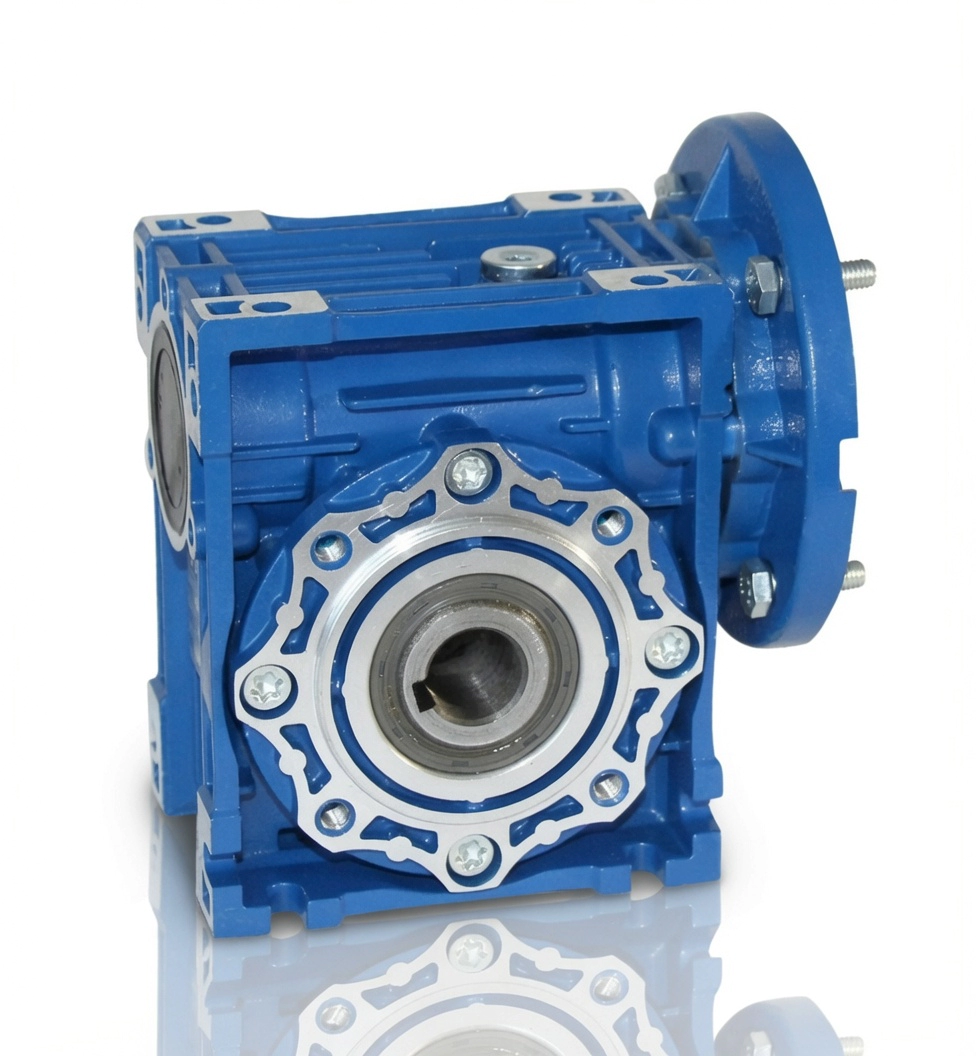
Available in frame sizes 025 through 150. Single-stage reduction ratios 5:1 to 100:1. Output torque up to 4,200 N·m. Aluminium or ductile iron housing. IEC B5/B14 motor flange. IP65 standard, IP66/IP67 optional. Synthetic or mineral oil lubrication.
Compliance & Quality Standards
Quality management system certified. Every unit manufactured and inspected under a documented QMS with full traceability.
CE marked for EU Machinery Directive. Widely accepted on Australian and New Zealand engineering projects.
IEC standard flange and shaft dimensions. Direct-mount compatibility with all major motor brands.
Dust-tight and high-pressure jet-water resistant. The standard for Australian outdoor installations.
Case Studies
Case Study 1 — Grain Storage Facility, Wagga Wagga NSW
Belt-and-Bucket Grain Elevator
Customer Pain Point: A grain storage cooperative replacing drives on three 28-metre elevators. Previous helical-bevel units needed quarterly backstop adjustment. Two backstop failures caused chain reversal and bucket damage costing over $18,000 per incident.
Solution: NMRV-110 worm gearboxes (ratio 60:1, ductile iron, IP65, food-grade H1 lubricant) installed on all three elevator head drives, making the external backstop redundant.
Result: Zero reversal incidents over two full harvest seasons. Annual maintenance reduced from 22 to 4 labour-hours. Insurance claim history on the elevator line ended.
Case Study 2 — Copper Concentrate Handling Plant, South Australia
Chain Bucket Elevator — Copper Concentrate
Customer Pain Point: Copper concentrate was causing rapid seal degradation. Seals failing within 8 months, leading to oil contamination of the concentrate stream — a process quality rejection issue.
Solution: NRV series worm gearboxes with upgraded double-lip FKM shaft seals and external labyrinth seal housings, IP66 rated for wash-down of the concentrate handling area.
Result: Seal life extended from 8 months to over 30 months. Zero oil contamination events in two years. Concentrate quality rejections attributed to lubricant contamination fell to zero.
Case Study 3 — Cement Clinker Elevator, Queensland
Hot Clinker Bucket Elevator
Customer Pain Point: A cement plant’s clinker elevator operated in ambient temperatures exceeding 55°C near the kiln. Standard mineral oil was oxidising rapidly, causing varnish deposits and gearbox seizure every 4–5 months.
Solution: NRV-150 worm gearbox (ratio 40:1, cast iron) filled with synthetic PAO ISO VG 460 rated to 120°C continuous, plus forced-ventilation coupling to reduce heat transfer.
Result: Oil change interval extended from 4 months to 18 months. No seizure events in 24 months. Bearing temperature at the output shaft dropped by 14°C.
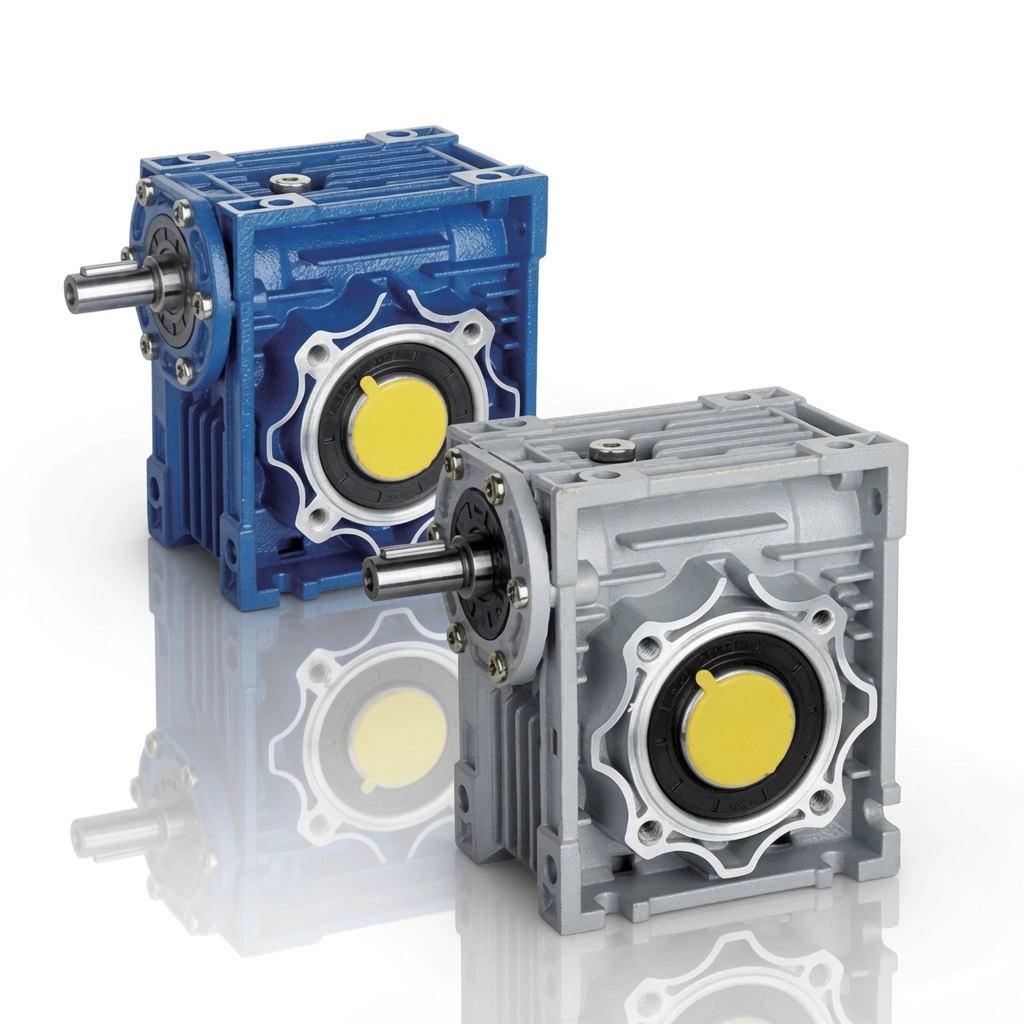
NMRV / NRV series worm gearboxes — frame sizes 025 to 150, manufactured to ISO 9001:2015
Why Choose Us?
20+ Years Manufacturing
ISO-certified production since 2003. Worm gearboxes shipped to 60+ countries.
Remote Technical Support
Video-call diagnostics across Australian time zones. Rapid response without on-site visits.
OEM / ODM Customisation
Non-standard shafts, hollow bore, custom flanges and ratios. Full drawing review available.
Factory-Direct Value
No distributor margin. Transparent volume pricing with significant savings on repeat orders.
Stock & Fast Dispatch
Standard NMRV/NRV frames in warehouse stock. Urgent orders processed for express freight.
Frequently Asked Questions
Size Your Bucket Elevator Worm Drive — Contact Us Today
Our engineers are ready to recommend the right worm gearbox model, ratio, shaft configuration, and mounting arrangement for your application.
Explore more on the applications page or learn about us on the about us page.