Worm Drive Unit for Aeration Tank Agitators
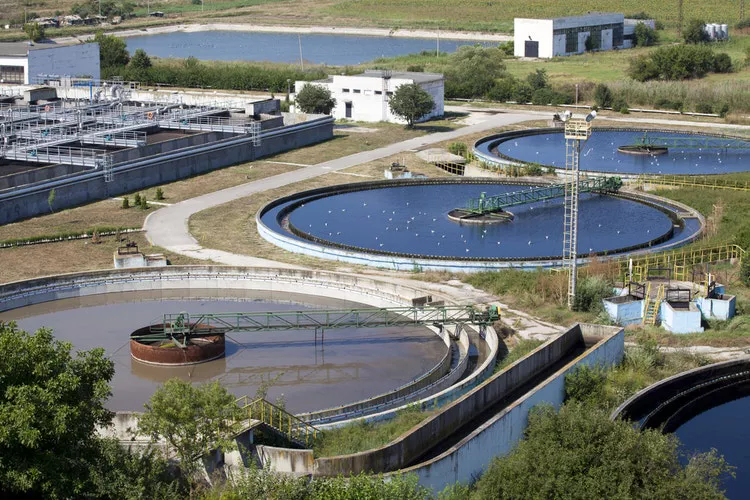
Aeration tanks in biological wastewater treatment are one of the most demanding environments for drive components: continuous 24-hour operation, exposure to hydrogen sulphide and ammonia vapour, high ambient humidity, and direct contact with aerosol spray from diffuser operation. The worm drive unit that drives submerged or surface aerator agitators must withstand all of these conditions while maintaining reliable, uninterrupted torque delivery — because a drive failure in an aeration tank means a process shutdown that triggers regulatory compliance issues and operational penalties.
Australian wastewater treatment plants — operated by Sydney Water, Melbourne Water, SA Water, Water Corporation WA, and hundreds of local government utilities — increasingly rely on continuous mechanical aeration as a core treatment process. Surface aerators, slow-speed mixers, and submerged paddle agitators all require low-speed, high-torque drive units that can run unattended for thousands of hours between planned maintenance stops.
The compact, enclosed worm gearbox also benefits the structural design of aeration tank equipment — its low-profile housing can be mounted directly on bridge-type aerator structures above the tank surface, minimising the structural load on the bridge deck and simplifying the sealing arrangements between the drive unit and the tank atmosphere below.
Industry Application & Use Cases
Worm drive units are used across multiple aeration and mixing applications in wastewater treatment:
- Surface aerator drives (brush rotor / disc-type) — low-speed rotation of surface aeration brush at 40–80 RPM
- Slow-speed agitator drives in anoxic and anaerobic zones — gentle mixing without aeration at 5–20 RPM
- Submerged paddle mixer drives — horizontal paddle rotation for sludge and activated-sludge suspension
- Sequencing batch reactor (SBR) decanting valve drives — controlled opening and closing of treated water decant gates
- Biogas digester agitator drives — continuous slow mixing inside anaerobic digesters under gas pressure
Material specification for wastewater aeration service: Worm shaft in alloy steel with nitriding treatment — significantly more resistant to hydrogen sulphide corrosion than standard quenched-and-tempered steel. Worm wheel in phosphor bronze — stable in the dilute acid and ammonia environment of activated sludge. Housing in ductile iron with anti-corrosion coating system (two-part epoxy primer + chemical-resistant polyurethane topcoat). IP55 minimum for above-tank-surface drives; IP65 for housings subject to aerosol spray. Double-lip FKM shaft seals to resist H2S and chloramine permeation.
24-hour continuous duty requirements: Aeration tank agitators are classified as continuous-duty, 24 hours per day, 365 days per year. The worm gearbox thermal power rating — not the peak torque rating — governs selection for continuous-duty applications. For continuous duty, select the next frame size above the torque-based minimum to provide adequate thermal margin, and specify synthetic PAO lubricant.
Technical Specifications & Selection Guide
Use the table below to identify the appropriate model. Key parameters include reduction ratio, output torque, shaft dimensions, and housing material. Always apply the correct Service Factor (SF) for your duty cycle.
| Parameter | Typical Range / Value | Selection Notes |
|---|---|---|
| Output Speed | 5 – 80 RPM (surface aerator applications) | Achieved via ratios 18:1–100:1 at standard motor speed |
| Output Torque | 200 – 4,200 N·m | Select on thermal rating for 24-hour continuous duty |
| Input Shaft | IEC 60034 B5/B14 motor flange | Direct mount to TEFC IP55 motors standard for wastewater |
| Housing Material | Ductile Iron, anti-corrosion coated | 2-part epoxy primer + PU topcoat for H2S environments |
| Shaft Seals | Double-lip FKM, IP65 rated | FKM mandatory — standard NBR degrades in H2S/ammonia atmosphere |
| Lubrication | Synthetic PAO ISO VG 320 (5,000 hr interval) | Continuous duty requires long-interval synthetic lubricant |
| Protection Class | IP55 minimum; IP65 aerosol-spray zones | IP55 for above-tank; IP65 for direct spray exposure |
► Service Factor (SF): Uniform load SF=1.0 | Moderate shock SF=1.25–1.5 | Heavy shock / 24 h continuous SF=1.75–2.0
► Ambient temperature: Standard units rated –10°C to +40°C. Australian high-ambient sites (>45°C) require high-temperature lubricant and 15% thermal derating.
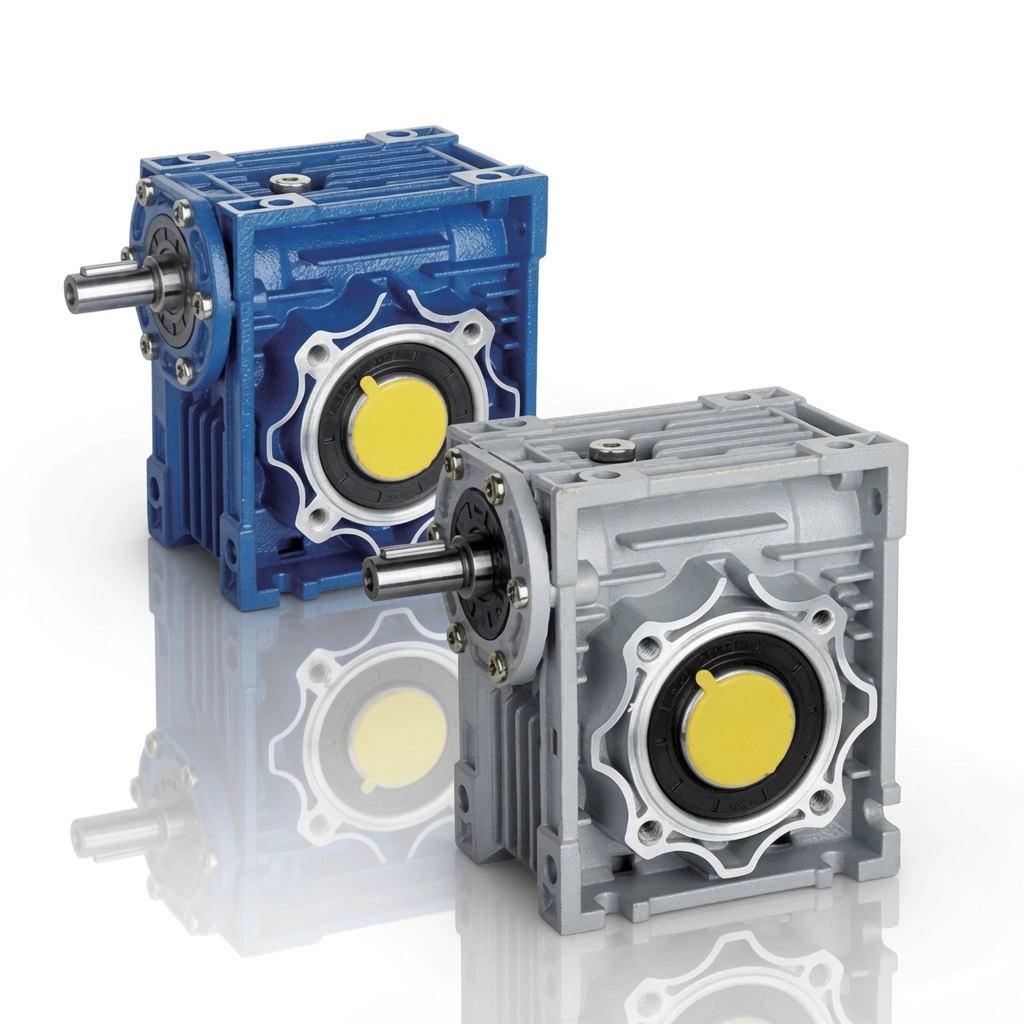
Available in frame sizes 025 through 150. Single-stage reduction ratios 5:1 to 100:1. Output torque up to 4,200 N·m. Aluminium or ductile iron housing. IEC B5/B14 motor flange. IP65 standard, IP66/IP67 optional. Synthetic or mineral oil lubrication.
Compliance & Quality Standards
Quality management system certified. Every unit manufactured and inspected under a documented QMS with full traceability.
CE marked for EU Machinery Directive. Widely accepted on Australian and New Zealand engineering projects.
IEC standard flange and shaft dimensions. Direct-mount compatibility with all major motor brands.
Dust-tight and high-pressure jet-water resistant. The standard for Australian outdoor installations.
Case Studies
Case Study 1 — Activated Sludge Aeration Tank, Western Sydney NSW
Surface Brush Aerator Drive
Customer Pain Point: A Western Sydney wastewater treatment plant was experiencing worm gearbox corrosion failures on 8 surface aerator drives every 14–18 months. Post-failure inspection consistently showed housing corrosion from H2S attack at the seal faces, with H2S concentration averaging 45 ppm.
Solution: NRV series worm gearboxes (ratio 30:1, ductile iron with two-part epoxy coating, FKM double-lip seals, IP65, synthetic PAO ISO VG 320) were installed on all 8 aerators.
Result: No seal or housing failures in 36 months of post-installation monitoring. The 8 drives collectively saved approximately $45,000 in avoided replacement cost over the 3-year period.
Case Study 2 — Anoxic Zone Agitator, Melbourne Water Treatment Plant VIC
Slow-Speed Anoxic Zone Mixer
Customer Pain Point: An advanced nitrogen removal plant was experiencing excessive power consumption on its anoxic zone agitator drives due to gearbox inefficiency. The original worm gearboxes had deteriorated to below 60% mechanical efficiency due to lubricant degradation in the high-humidity environment.
Solution: NMRV-110 worm gearboxes (ratio 50:1, aluminium housing with anodised corrosion protection, IP65, synthetic PAO ISO VG 220, sealed-for-life bearing configuration) were installed.
Result: Motor power draw on the anoxic agitators reduced by 28% compared to the degraded originals. Annual electricity cost saving on the 6 anoxic zone drives: approximately $3,200.
Case Study 3 — Biogas Digester Agitator, Regional Water Authority SA
Anaerobic Digester Agitator Drive
Customer Pain Point: A regional wastewater authority’s anaerobic digester agitator gearbox was experiencing methane-gas ingress through the shaft seal, detected by the plant safety system as a slow methane leak from the digester shaft penetration.
Solution: NRV series worm gearbox with gas-tight FKM V-ring shaft seal (outer) plus mechanical face seal (inner), IP67 rated housing, stainless shaft extension, and synthetic high-temperature lubricant (100°C rated) was installed.
Result: Methane leak eliminated — plant safety system confirmed zero gas detection at the shaft penetration. The gearbox has operated continuously for 28 months without seal replacement.
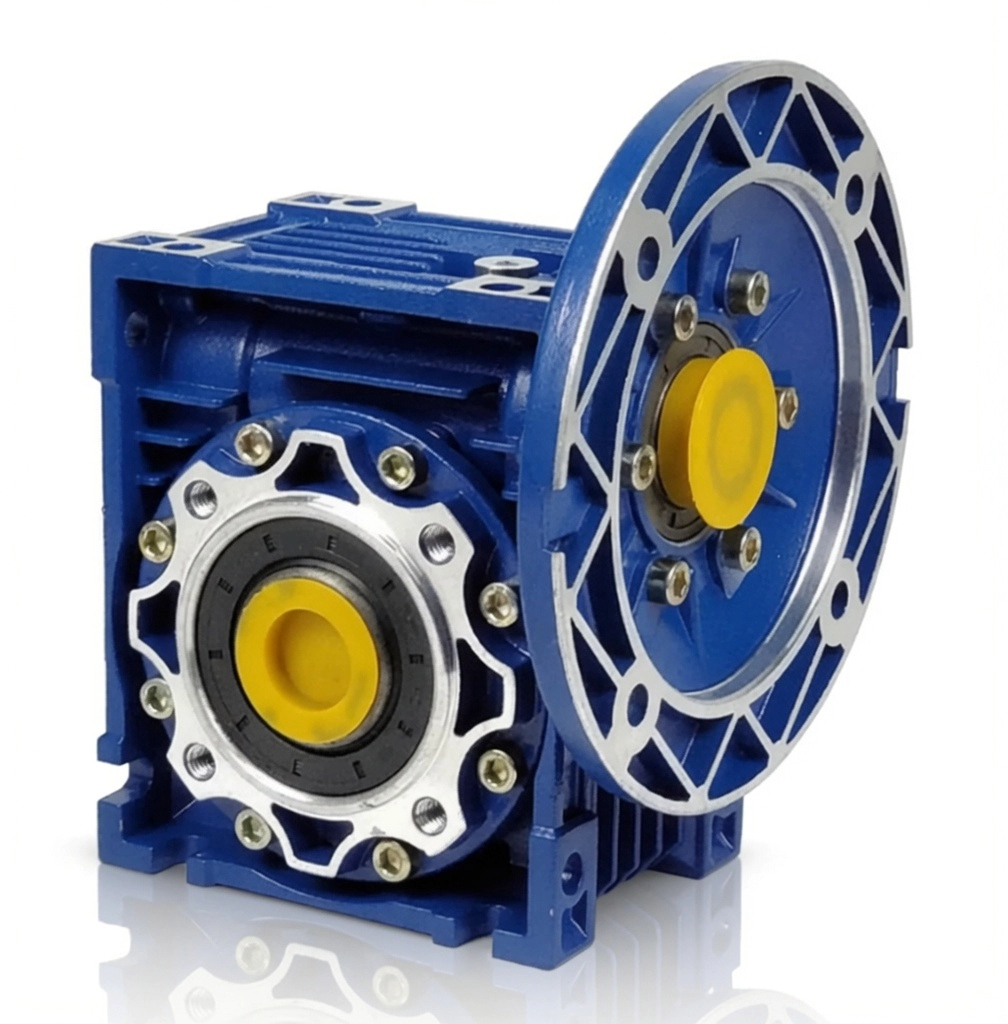
NMRV / NRV series worm gearboxes — frame sizes 025 to 150, manufactured to ISO 9001:2015
Why Choose Us?
20+ Years Manufacturing
ISO-certified production since 2003. Worm gearboxes shipped to 60+ countries.
Remote Technical Support
Video-call diagnostics across Australian time zones. Rapid response without on-site visits.
OEM / ODM Customisation
Non-standard shafts, hollow bore, custom flanges and ratios. Full drawing review available.
Factory-Direct Value
No distributor margin. Transparent volume pricing with significant savings on repeat orders.
Stock & Fast Dispatch
Standard NMRV/NRV frames in warehouse stock. Urgent orders processed for express freight.
Frequently Asked Questions
Specify Your Aeration Tank Drive — Contact Us Today
Our engineers are ready to recommend the right worm gearbox model, ratio, shaft configuration, and mounting arrangement for your application.
Explore more on the applications page or learn about us on the about us page.