Worm Gear Drive for Wind Turbine Pitch Control Systems

Wind energy accounted for 39.4% of Australia’s renewable electricity generation in 2023, with installed capacity continuing to grow across South Australia, Victoria, New South Wales, and Western Australia. The pitch control system — which adjusts each turbine blade’s angle to regulate power output and protect the rotor in overspeed or storm conditions — is one of the most maintenance-sensitive mechanical systems in the nacelle. The worm gear drive serves as the auxiliary pitch actuator mechanism and backup pitch drive in many turbine designs, particularly on smaller onshore turbines and in retrofit applications.
Its self-locking property ensures that if the primary hydraulic pitch system loses pressure, the blade angle is held by the worm geometry and does not change, preventing uncontrolled overspeed. The compact worm housing also integrates neatly within the space-constrained pitch drive compartment inside the blade hub.
The Australian wind energy sector — growing rapidly with offshore wind development commencing in Victoria and New South Wales — creates sustained demand for replacement and retrofit pitch drive components. Australian wind operators and maintenance contractors require locally accessible, technically supported worm gear drive solutions that can reduce import lead times for routine maintenance requirements.
Industry Application & Use Cases
Worm gear drives appear in multiple positions within wind turbine pitch control systems:
- Auxiliary pitch actuator drive (backup to primary hydraulic or electric system) — emergency feathering drive
- Independent pitch system (IPS) drives on smaller wind turbines — primary pitch control drive
- Pitch angle fine-trim actuator — precision incremental blade angle adjustment under partial load
- Vane sensor positioning drive — slow rotation of anemometer/wind vane assembly on nacelle top
- Yaw brake release actuator — controlled engagement/disengagement of nacelle yaw brake pads
Material specification for wind turbine pitch service: Worm shaft in carburised-and-quenched alloy steel, rated for the extreme temperature range experienced in the blade hub (–25°C in alpine sites to +70°C during summer in north QLD hub interiors). Worm wheel in special alloy bronze with good low-temperature toughness — brittleness at sub-zero temperatures is a known failure mode for standard phosphor bronze under high-impact pitch correction loads. Housing in aluminium alloy or stainless steel, fully sealed to IP66.
Emergency pitch reliability requirements: Wind turbine pitch systems must be rated for fail-safe feathering operation — moving the blade from operating angle (typically 0° to 15°) to the full-feather position (approximately 90°) in under 6 seconds. The worm gear drive’s high torque output from a compact motor must achieve this travel time while overcoming the aerodynamic restoring force on the blade.
Technical Specifications & Selection Guide
Use the table below to identify the appropriate model. Key parameters include reduction ratio, output torque, shaft dimensions, and housing material. Always apply the correct Service Factor (SF) for your duty cycle.
| Parameter | Typical Range / Value | Selection Notes |
|---|---|---|
| Ratio | 60:1 – 100:1 for pitch drives | Provides adequate torque from compact 24V/48V DC motor |
| Output Torque | 200 – 2,000 N·m | Apply SF=1.5 for rated; confirm 6-second emergency feather |
| Temperature Range | –25°C to +70°C operation | Special low-temperature alloy bronze wheel and PAO lubricant |
| Input Shaft | IEC 60034 B14 / custom pitch motor mount | Match to OEM pitch motor flange footprint |
| Housing Material | Aluminium IP66 / SS316 IP66 | SS316 for offshore or coastal turbine sites |
| Shaft Seals | Double FKM, IP66 rated | Prevent salt-laden condensation ingress in coastal hub |
| Lubrication | Synthetic PAO ISO VG 320 (low pour point) | Low pour point lubricant mandatory for alpine wind sites |
► Service Factor (SF): Uniform load SF=1.0 | Moderate shock SF=1.25–1.5 | Heavy shock / 24 h continuous SF=1.75–2.0
► Ambient temperature: Standard units rated –10°C to +40°C. Australian high-ambient sites (>45°C) require high-temperature lubricant and 15% thermal derating.
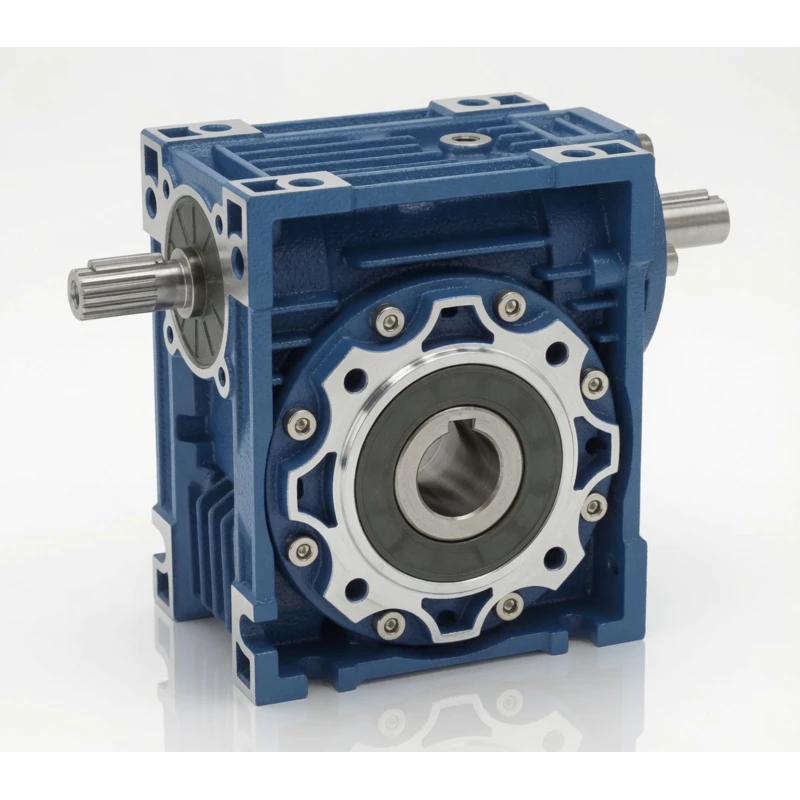
Available in frame sizes 025 through 150. Single-stage reduction ratios 5:1 to 100:1. Output torque up to 4,200 N·m. Aluminium or ductile iron housing. IEC B5/B14 motor flange. IP65 standard, IP66/IP67 optional. Synthetic or mineral oil lubrication.
Compliance & Quality Standards
Quality management system certified. Every unit manufactured and inspected under a documented QMS with full traceability.
CE marked for EU Machinery Directive. Widely accepted on Australian and New Zealand engineering projects.
IEC standard flange and shaft dimensions. Direct-mount compatibility with all major motor brands.
Dust-tight and high-pressure jet-water resistant. The standard for Australian outdoor installations.
Case Studies
Case Study 1 — Onshore Wind Farm Pitch Drive Retrofit, South Australia
Independent Pitch System (IPS) Backup Drive
Customer Pain Point: A South Australian wind farm operator was replacing hydraulic pitch systems on 12 turbines. The original hydraulic accumulators required nitrogen recharge every 6 months and had caused 3 blade overspeed events due to accumulator pressure loss in cold overnight conditions.
Solution: Battery-backed electric IPS drives using NRV series worm gearboxes (ratio 80:1, aluminium IP66, low-temperature bronze wheel, synthetic PAO ISO VG 220, 24V DC motor) were installed on all three blades of the 12 turbines. The worm self-lock replaced the hydraulic accumulator hold function.
Result: Zero overspeed events in 24 months post-commissioning across all 12 turbines. Hydraulic maintenance requirement eliminated. Estimated annual maintenance saving per turbine: $3,800.
Case Study 2 — Coastal Wind Farm, Gippsland VIC
Nacelle Yaw Brake Release Actuator
Customer Pain Point: A coastal Victoria wind farm was experiencing yaw brake actuator corrosion failures — the cast iron actuator housings and standard carbon steel shafts were corroding rapidly in the coastal marine atmosphere, with some actuators seizing completely within 14 months.
Solution: NRV series worm gearboxes (ratio 40:1, stainless steel 316 housing, stainless shaft extension, IP66, FKM seals, synthetic PAO lubricant) were installed as replacement yaw brake release actuators.
Result: No corrosion or seizing failures in 36 months of coastal service. Yaw brake-related unplanned downtime eliminated. The farm’s operations manager extended the same SS316 worm gearbox specification to all future actuator replacements across the 28-turbine farm.
Case Study 3 — Alpine Wind Farm, Snowy Mountains NSW
Pitch Angle Fine-Trim Actuator — Alpine Site
Customer Pain Point: A wind farm in the Snowy Mountains at 1,800 m elevation was experiencing pitch actuator gear failures in winter — temperatures in the blade hub reached –22°C, and standard phosphor bronze worm wheels were brittle-fracturing under impact load.
Solution: NMRV-090 worm gearboxes with special low-temperature alloy tin bronze worm wheels (maintaining adequate toughness to –40°C), synthetic PAO ISO VG 220 with pour point –55°C, and IP66 full-seal specification were installed.
Result: Zero wheel fracture failures in the first winter season post-installation (minimum recorded hub temperature –21°C during July). The alpine wind farm’s winter availability factor improved from 87% to 94.5%.
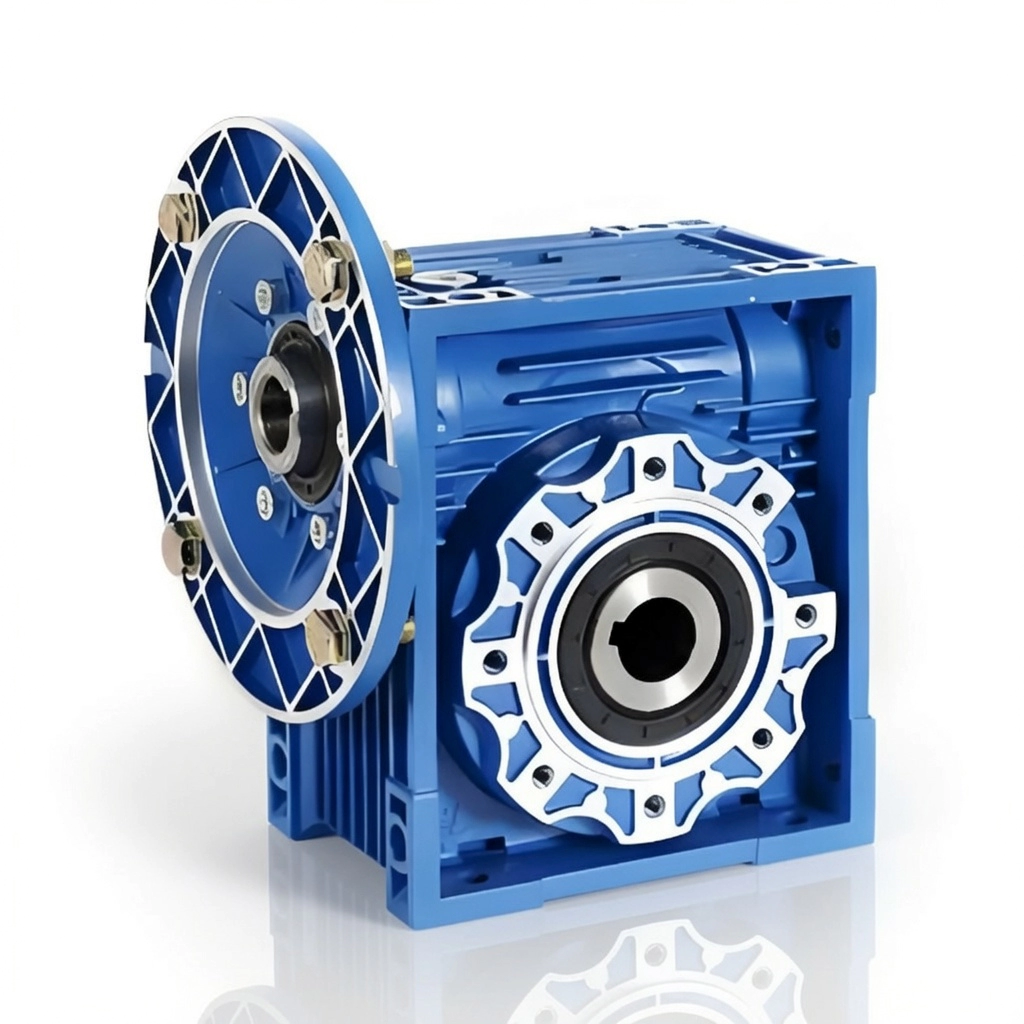
NMRV / NRV series worm gearboxes — frame sizes 025 to 150, manufactured to ISO 9001:2015
Why Choose Us?
20+ Years Manufacturing
ISO-certified production since 2003. Worm gearboxes shipped to 60+ countries.
Remote Technical Support
Video-call diagnostics across Australian time zones. Rapid response without on-site visits.
OEM / ODM Customisation
Non-standard shafts, hollow bore, custom flanges and ratios. Full drawing review available.
Factory-Direct Value
No distributor margin. Transparent volume pricing with significant savings on repeat orders.
Stock & Fast Dispatch
Standard NMRV/NRV frames in warehouse stock. Urgent orders processed for express freight.
Frequently Asked Questions
Get Wind Turbine Pitch Drive Technical Support
Our engineers are ready to recommend the right worm gearbox model, ratio, shaft configuration, and mounting arrangement for your application.
Explore more on the applications page or learn about us on the about us page.