
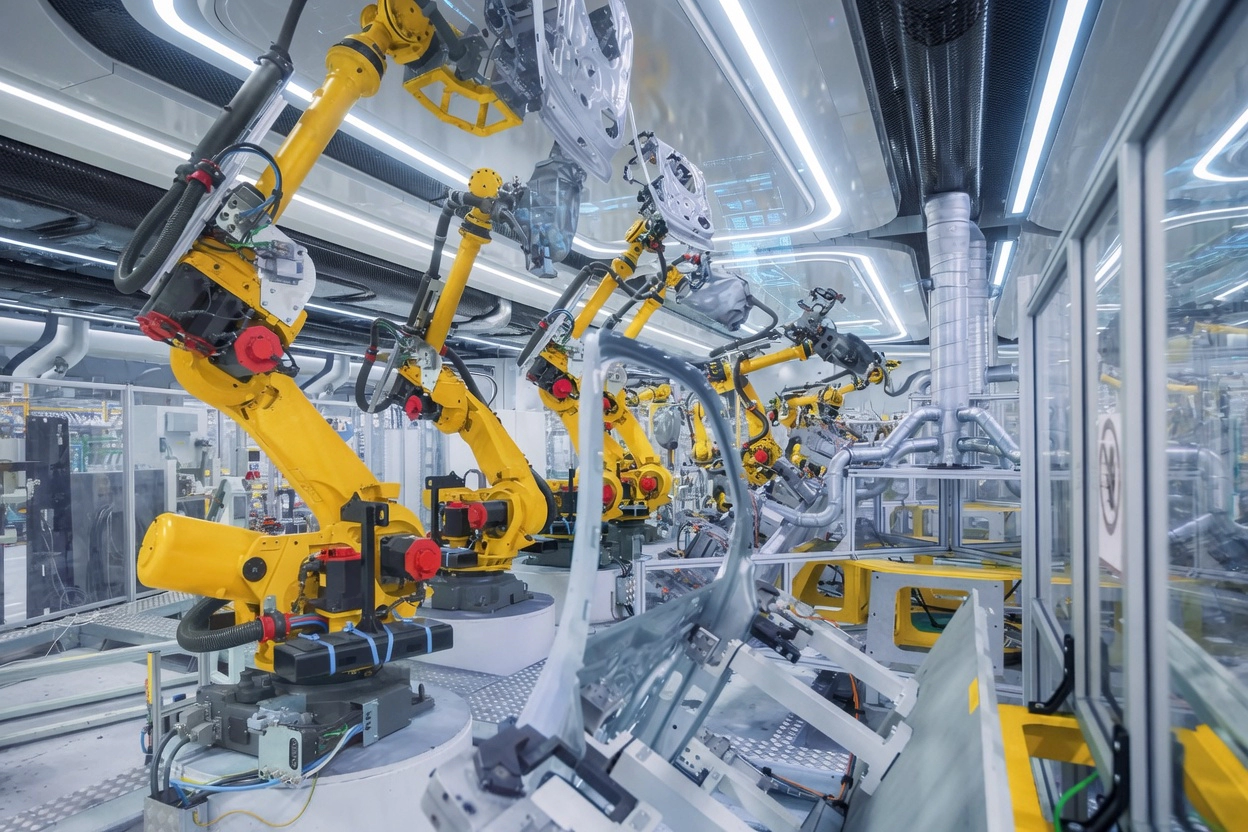
Load Holding Safety — The Core Requirement
In vertical load-handling applications, the primary engineering requirement is not torque output or efficiency — it is the absolute prevention of uncontrolled load descent. Cranes, hoists, goods lifts, and materials elevators in industrial environments must hold their loads at any position in the event of motor trip, power failure, or emergency stop. This requirement disqualifies helical, bevel, and spur gearboxes from many lifting applications unless expensive external brakes are added and maintained.
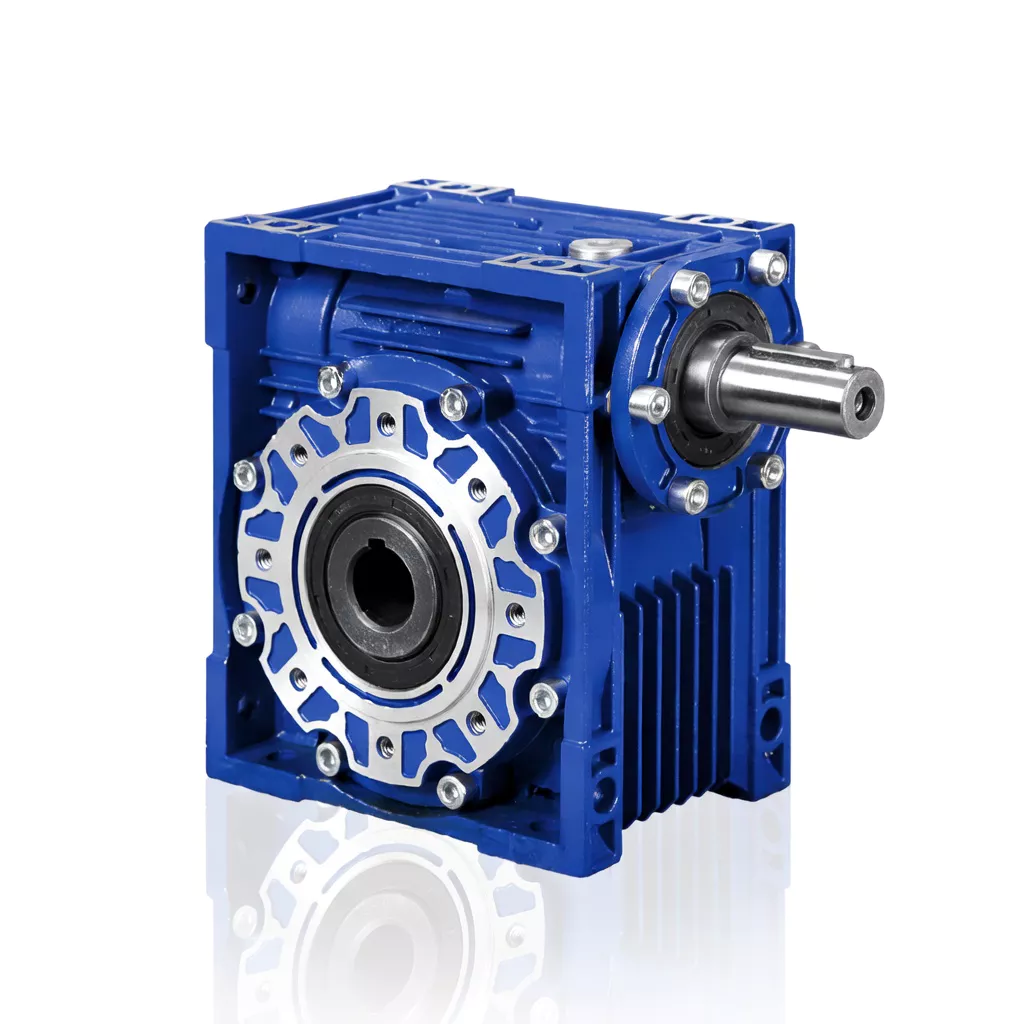
The worm gear reducer — also known as a worm gearbox, worm drive unit, or worm gear drive — eliminates this requirement through geometry. The high lead angle of the worm causes irreversibility under load: the worm gear cannot back-drive the worm shaft. This self-locking property is inherent and requires no maintenance, no power, and no external actuation — it is a mechanical safety feature built into every worm gearbox.
Material Construction — Built for Industrial Duty
Application Case Studies
Case Study 1 — Steel Fabrication Workshop Overhead Crane, Queensland
Manufacturing | Overhead Crane
Challenge: A steel fabrication yard near Brisbane operated a 3.2-tonne overhead bridge crane. The helical gearbox on the cross-travel trolley lacked adequate braking and twice allowed the loaded hook to drift sideways under inertia. A near-miss incident triggered a safety review.
Solution: Cross-travel drive replaced with an NMRV-110 worm gearbox (ratio 60:1, ductile iron housing, taper roller bearing upgrade). The self-lock held the trolley position on any beam position when the motor was de-energised.
Result: Zero drift incidents in 18 months of post-installation operation. WorkSafe audit passed. Total installation cost was 40% lower than the original servo-brake solution.
Case Study 2 — Warehouse Goods Hoist, Western Australia
Logistics | Goods Hoist
Challenge: A Fremantle port-side warehouse used an aging chain-drive goods hoist to move palletised goods between ground and mezzanine floors. The friction brake required adjustment every 6 weeks and had partially released during one load cycle, requiring emergency manual intervention.
Solution: A tandem worm gearbox arrangement (NMRV-090 + NMRV-063, combined ratio 3000:1) was installed, providing both the required output torque of 1,800 N·m and inherent static load-hold. The friction brake was retained in dual-redundancy configuration for regulatory compliance.
Result: Hoist passed new SafeWork WA inspection. Brake adjustment frequency reduced to once per year. Hoist rated for 1,500 kg SWL at 6 metres/minute continuous duty.
Why Choose Our Worm Gearboxes for Lifting Applications?
Lifting-Duty Rated
Worm gearboxes rated for Class M4–M6 lifting duty per FEM 9.511 on selected models — ask our engineers
OEM Custom Builds
Custom drum shafts, hollow bore output, flange mounting, and extended shaft specials for hoist OEM designs
24/7 Remote Support
Engineering consultation across Australia’s time zones — urgent replacement sizing completed same business day
Factory-Direct Value
Direct supply eliminates distributor margins — significant savings on replacement gearbox programs for crane fleets
Specify Your Hoist Gearbox
Send us your load, speed, and duty cycle data. We return a complete gearbox selection with dimensional drawings within one business day.
Browse all available models on the products page or explore other industrial uses on our applications page.