Worm Drive Reducer for Irrigation Valve Actuators
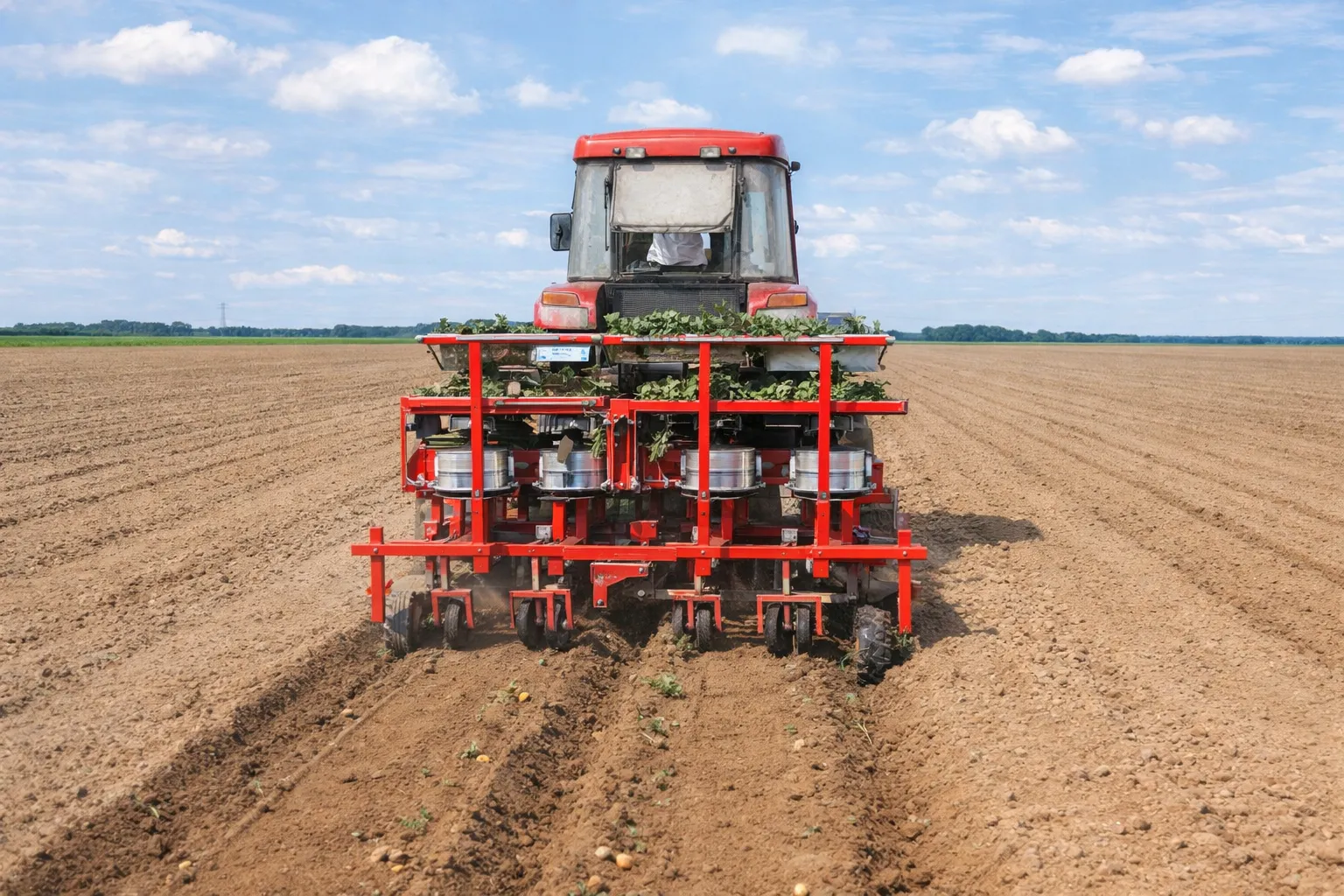
Australia is the world’s driest inhabited continent, and precision irrigation management is a fundamental requirement for the sustainability of its agricultural sector. From the Murray-Darling Basin’s orchards and vineyards to the cotton-growing plains of northern NSW and Queensland’s sugarcane country, automated irrigation valve actuators control the flow of billions of litres of water annually. At the heart of each actuator is a worm drive reducer — chosen for its ability to translate low motor torque into high output force for valve operation, while holding valve position exactly when the motor is de-energised.
The self-locking property of the worm gear pair is uniquely valuable in irrigation valve service: once the motor sets the valve to its commanded position, the worm geometry prevents any valve movement — even under full pipeline pressure differential across the valve disc. This means the valve holds its set position through power outages, pump surges, and pressure transients without requiring a spring-return or electromagnetic latch mechanism.
For Australian irrigation system designers and integrators, this combination of compact size, high torque multiplication, and inherent hold makes the worm reducer the standard solution for ball valve, butterfly valve, and gate valve actuation across drip, sprinkler, and flood irrigation systems of all scales.
Branchenanwendungen und Anwendungsfälle
Worm drive reducers appear throughout automated irrigation systems in Australia:
- Butterfly valve actuators on main irrigation headers — DN200–DN600 valves requiring high operating torque
- Ball valve actuators on lateral zone control — compact actuators for 25–100 mm zone valves
- Gate valve drives on channel outlets — slow precise gate opening on gravity-fed channel systems
- Variable-rate dripper zone control — multi-zone sequencing actuators for precision fertigation
- Pump bypass and pressure relief valve drives — controlled opening/closing under system pressure
Material specification for irrigation valve service: Worm shaft in stainless steel 304 or alloy steel with corrosion-resistant surface treatment — essential for valve actuators continuously exposed to ambient moisture, fertiliser spray, and chlorinated irrigation water. Worm wheel in phosphor bronze or nylon PA66 for low-torque, lightweight actuators. Housing in die-cast aluminium ADC12 — lightweight for valve mounting, corrosion resistant, available in IP65 rating.
Actuator torque requirements: Valve operating torque depends on valve size and pressure rating. As a reference: DN100 butterfly valve at 10 bar requires approximately 30–60 N·m; DN400 butterfly valve at 16 bar requires 400–800 N·m. The worm reducer multiplies motor torque by the reduction ratio.
Technische Spezifikationen & Auswahlhilfe
Nutzen Sie die untenstehende Tabelle, um das passende Modell zu ermitteln. Wichtige Parameter sind Untersetzungsverhältnis, Abtriebsdrehmoment, Wellenabmessungen und Gehäusematerial. Verwenden Sie stets das richtige Modell. Servicefaktor (SF) für Ihren Arbeitszyklus.
| Parameter | Typischer Bereich / Wert | Auswahlhinweise |
|---|---|---|
| Verhältnis | 20:1 – 80:1 typical for valve actuators | Higher ratios for large gate valves; lower for fast-cycle ball valves |
| Ausgangsdrehmoment | 10 – 1,500 N·m | Covers DN25 ball valve to DN600 butterfly valve |
| Eingangsanschluss | IEC B14 face flange | IEC 60034 — direct-mount to small actuator motors |
| Abtriebswelle | Vollwelle mit Keilwellenverzahnung | Keyed shaft mates with valve stem square-drive or coupling |
| Gehäusematerial | Aluminium ADC12 (standard); SS316 (corrosive) | SS316 for seawater, recycled water, high-chlorine applications |
| Shaft Material | SS304 standard; SS316 option | SS316 for continuous submersion or chemical exposure |
| Schutzklasse | IP65 standard; IP67 for submersible duty | IP67 for actuators near channel edges or flood-prone sites |
► Servicefaktor (SF): Gleichmäßige Belastung SF=1,0 | Mittlerer Stoß SF=1,25–1,5 | Starker Stoß / 24 h Dauerbelastung SF=1,75–2,0
► Umgebungstemperatur: Standardgeräte sind für einen Temperaturbereich von –10 °C bis +40 °C ausgelegt. Für Standorte mit hohen Umgebungstemperaturen in Australien (>45 °C) sind Hochtemperaturschmierstoffe und eine thermische Leistungsreduzierung gemäß 15% erforderlich.
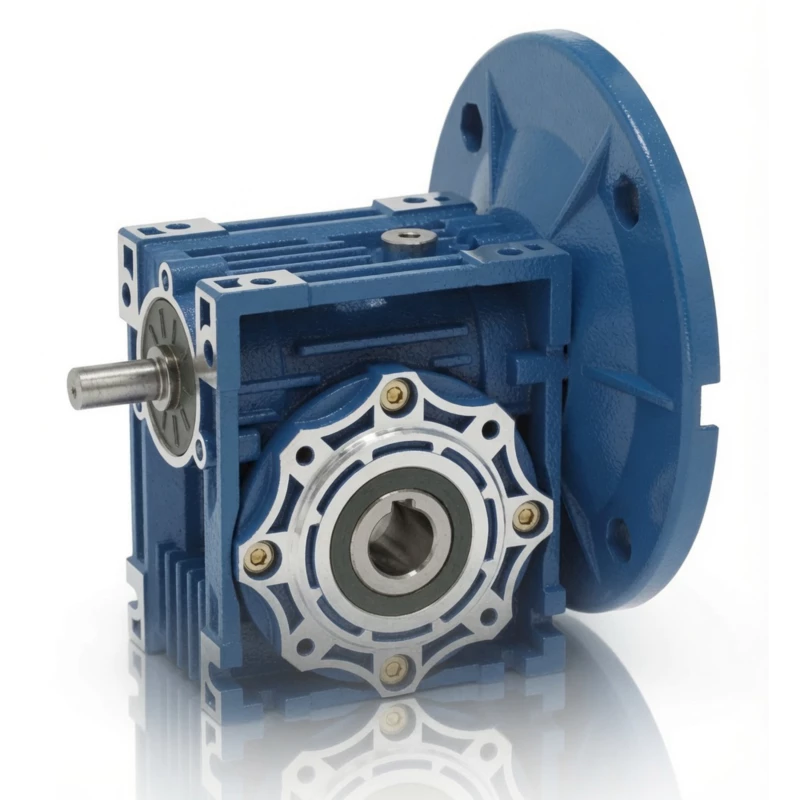
Erhältlich in den Baugrößen 025 bis 150. Einstufige Untersetzungsverhältnisse 5:1 bis 100:1. Abtriebsdrehmoment bis zu 4.200 Nm. Gehäuse aus Aluminium oder Sphäroguss. Motorflansch nach IEC B5/B14. Schutzart IP65 (Standard), IP66/IP67 optional. Schmierung mit synthetischem oder Mineralöl.
Konformitäts- und Qualitätsstandards
Qualitätsmanagementsystem zertifiziert. Jede Einheit wird gemäß einem dokumentierten Qualitätsmanagementsystem mit vollständiger Rückverfolgbarkeit hergestellt und geprüft.
CE-Kennzeichnung gemäß EU-Maschinenrichtlinie. Weitgehend akzeptiert bei australischen und neuseeländischen Maschinenbauprojekten.
IEC-Standard-Flansch- und Wellenabmessungen. Direktmontagekompatibilität mit allen gängigen Motormarken.
Staubdicht und beständig gegen Hochdruckstrahlwasser. Der Standard für australische Außeninstallationen.
Fallstudien
Case Study 1 — Drip Irrigation Zone Control, Barossa Valley SA
Butterfly Valve Zone Actuators — Dripper Network
Problem des Kunden: A Barossa Valley winery was operating 24 irrigation zones with manual butterfly valves — a 45-minute manual operation each irrigation cycle, and operator error in valve position was causing vine stress from uneven water distribution across vineyard blocks.
Lösung: NMRV-040 worm reducers (ratio 40:1, aluminium housing, IP65, stainless shaft, 24V DC motor) were installed on all 24 butterfly valves, connected to the vineyard’s fertigation controller via dry-contact relay signals.
Ergebnis: Manual valve operation eliminated — zone irrigation fully automated. Operator time saved approximately 40 hours per week across the growing season. One block showed a 12% yield improvement in year one post-installation.
Case Study 2 — Cotton Irrigation Channel Gate Control, Narrabri NSW
Channel Outlet Gate Valve Actuators
Problem des Kunden: A cotton property was experiencing gate position drift on its gravity-fed channel outlet gates. Manual screw actuators across 14 channel outlets required a tractor and operator for each gate adjustment — a 6-hour daily task during peak irrigation.
Lösung: NRV series worm reducers (ratio 100:1, ductile iron housing, IP65, 240V AC motor with PLC interface) were installed on all 14 channel gate outlets. The 100:1 ratio held each gate at its commanded opening against the full water head pressure.
Ergebnis: Daily gate adjustment time reduced from 6 hours to under 20 minutes. Channel water distribution efficiency improved by an estimated 18%.
Case Study 3 — Avocado Orchard Fertigation System, Bundaberg QLD
Ball Valve Fertigation Zone Actuators
Problem des Kunden: An avocado grower was experiencing corrosion failures on 38 zone valve actuators in their fertigation system. Fertiliser solution containing phosphoric acid and potassium nitrate was attacking the zinc-alloy housings and corroding alloy steel valve stems within 12–18 months.
Lösung: NMRV-025 worm reducers (ratio 60:1, aluminium anodised housing, stainless steel 316 output shaft, IP65 with FKM seals resistant to phosphoric acid) were specified for the replacement programme.
Ergebnis: No corrosion failures observed over 24 months of fertigation service. Actuator service life extended from 12–18 months to the target 5-year design life.
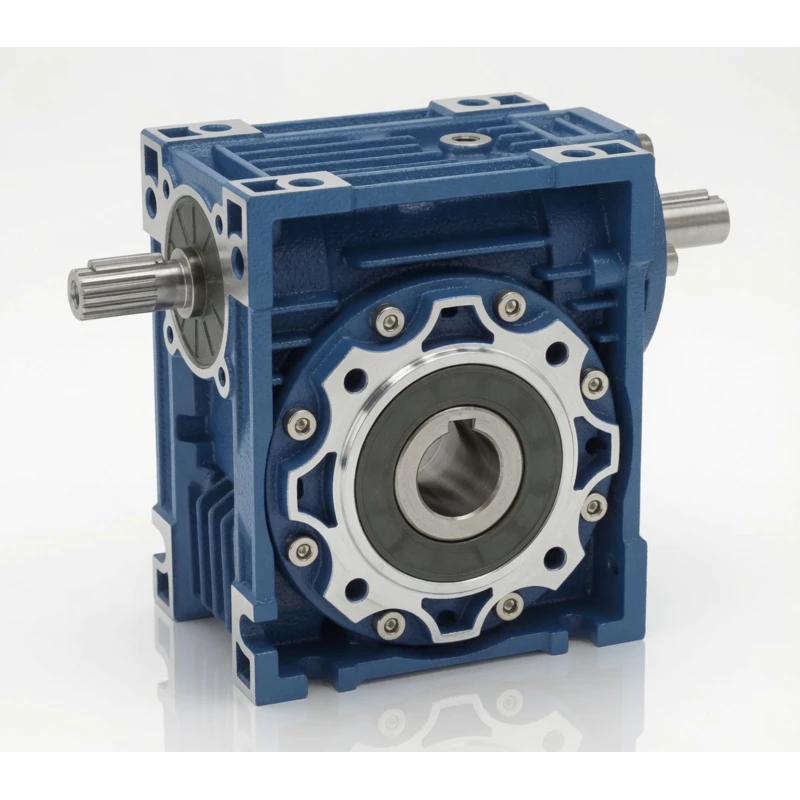
NMRV / NRV Schneckengetriebe – Baugrößen 025 bis 150, hergestellt nach ISO 9001:2015
Warum sollten Sie sich für uns entscheiden?
Über 20 Jahre Erfahrung in der Fertigung
Produktion nach ISO-Norm seit 2003. Schneckengetriebe werden in über 60 Länder geliefert.
Technischer Support per Fernzugriff
Videotelefonische Diagnostik über alle australischen Zeitzonen hinweg. Schnelle Reaktion ohne Vor-Ort-Besuche.
OEM-/ODM-Anpassung
Sonderwellen, Hohlbohrungen, kundenspezifische Flansche und Übersetzungen. Vollständige Zeichnungsprüfung möglich.
Direkt vom Hersteller
Keine Händlermarge. Transparente Mengenpreise mit erheblichen Einsparungen bei Folgebestellungen.
Lagerware & schneller Versand
Standardmäßige NMRV/NRV-Rahmen sind ab Lager verfügbar. Eilbestellungen werden per Expressversand bearbeitet.
Häufig gestellte Fragen
Get Irrigation Actuator Sizing Help from Our Engineers
Unsere Ingenieure beraten Sie gerne hinsichtlich des passenden Schneckengetriebemodells, des Übersetzungsverhältnisses, der Wellenkonfiguration und der Montageanordnung für Ihre Anwendung.
Entdecken Sie mehr auf der Anwendungsseite oder erfahren Sie mehr über uns auf der Über uns-Seite.