Caja de engranajes helicoidales para elevadores de cangilones
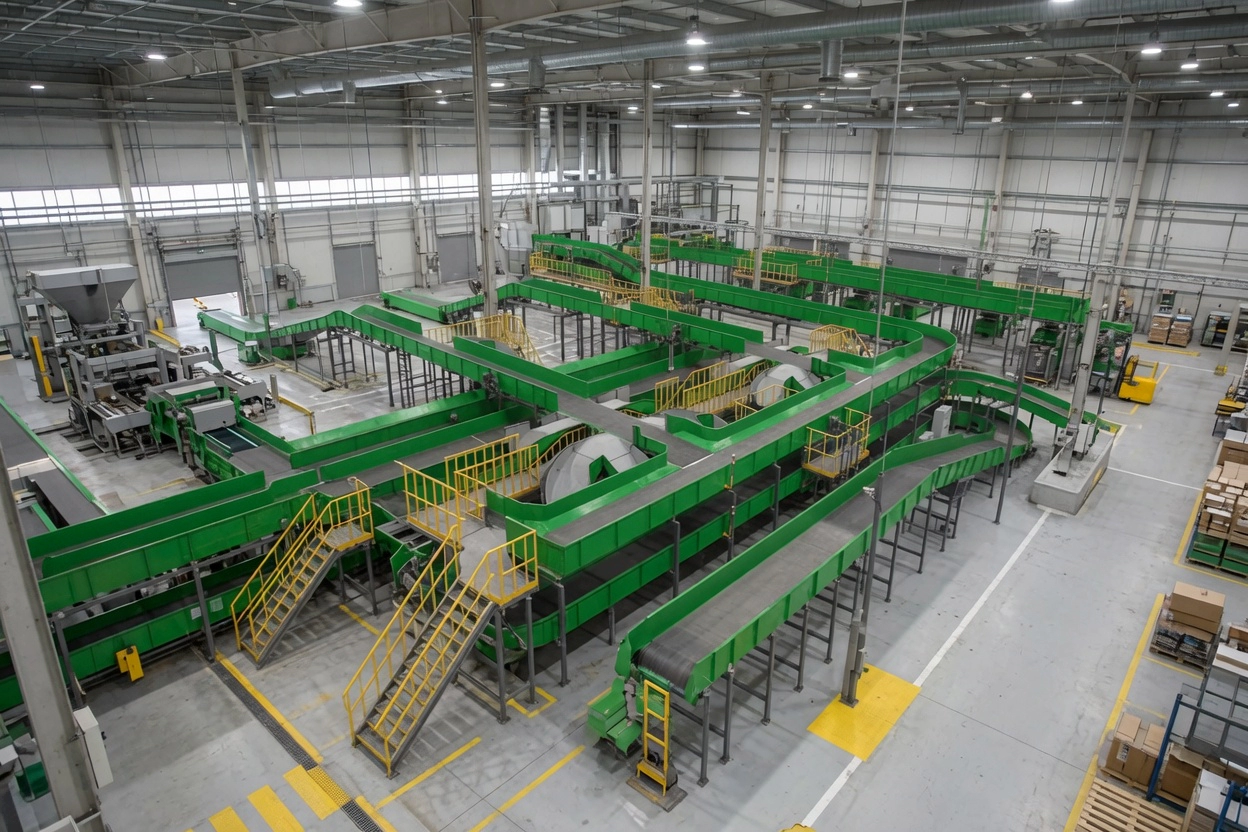
Bucket elevators perform one of the most demanding vertical lifting tasks in mining, grain handling, and cement production — continuously raising bulk material from a boot section to a discharge head, often at heights exceeding 30 metres. The drive system must deliver high torque at low output speed, hold the loaded buckets stationary when power is cut, and operate reliably through extended unattended shifts.
El reductor de engranajes helicoidales is uniquely matched to these requirements. Its inherent self-locking mechanism prevents the bucket string from reversing and spilling material when the motor stops or trips — a safety-critical requirement that would otherwise demand a secondary braking system. The compact right-angle form factor also simplifies integration into the elevator head frame where space is typically constrained.
For Australian mining and agricultural facilities, bucket elevator drives must withstand high ambient temperatures, dusty environments, and infrequent maintenance access. NMRV and NRV series worm gearboxes — with IP65 sealing and ductile iron housings rated for continuous heavy duty — are the established choice.
Aplicaciones y casos de uso en la industria
In a typical bucket elevator installation, the worm gearbox is mounted at the head section, coupling the drive motor to the head shaft that carries the bucket chain or belt sprocket. Specific application points:
- Head drive on chain-type bucket elevators — high starting torque, smooth engagement
- Belt-and-bucket elevator drives — steady low-speed output prevents bucket overfilling on pick-up
- Enclosed grain elevator drives — food-grade lubricant option for grain contact zones
- Underground ore pass elevator drives — compact housing fits restricted underground headroom
Material specifications: Worm shaft in carburised-and-quenched alloy steel (HRC 58–62). Worm wheel in special alloy bronze, centrifugally cast for density uniformity and impact resistance. Housing in ductile iron GGG40 with IP65 sealing. Taper roller bearings on both input and output shafts.
Self-locking principle: When the drive motor trips, the loaded bucket string generates reverse torque on the output shaft. Because the worm lead angle is below the friction angle of the worm–bronze interface, this reverse torque cannot rotate the worm shaft backward — the load is held statically without electrical or mechanical brake.
Especificaciones técnicas y guía de selección
Utilice la tabla a continuación para identificar el modelo apropiado. Los parámetros clave incluyen la relación de reducción, el par de salida, las dimensiones del eje y el material de la carcasa. Aplique siempre el correcto Factor de servicio (SF) para su ciclo de trabajo.
| Parámetro | Rango/Valor típico | Notas de selección |
|---|---|---|
| Relación | 10:1 – 100:1 (single-stage) | Higher ratios via tandem for very slow bucket travel speeds |
| Par de salida | Hasta 4200 N·m | Frame 025 through 150 covers most elevator sizes |
| Input Shaft Diameter | 11 – 42 mm | IEC 60034 standard flanges B5 / B14 |
| Output Shaft Diameter | 14 – 50 mm solid | Hollow bore from frame 030 for direct head shaft coupling |
| Material de vivienda | Hierro dúctil GGG40 | Standard for heavy continuous elevator duty |
| Mounting Type | Foot / Flange / Torque-arm | Torque-arm mount common on head-section installations |
| Clase de protección | IP65 standard | IP66 for wet cleaning zones in grain facilities |
► Factor de servicio (FS): Carga uniforme SF=1,0 | Choque moderado SF=1,25–1,5 | Choque fuerte / 24 h continuo SF=1,75–2,0
► Temperatura ambiente: Las unidades estándar tienen una clasificación de -10 °C a +40 °C. Las instalaciones australianas con altas temperaturas ambiente (>45 °C) requieren lubricante de alta temperatura y una reducción de la capacidad térmica según la norma 15%.
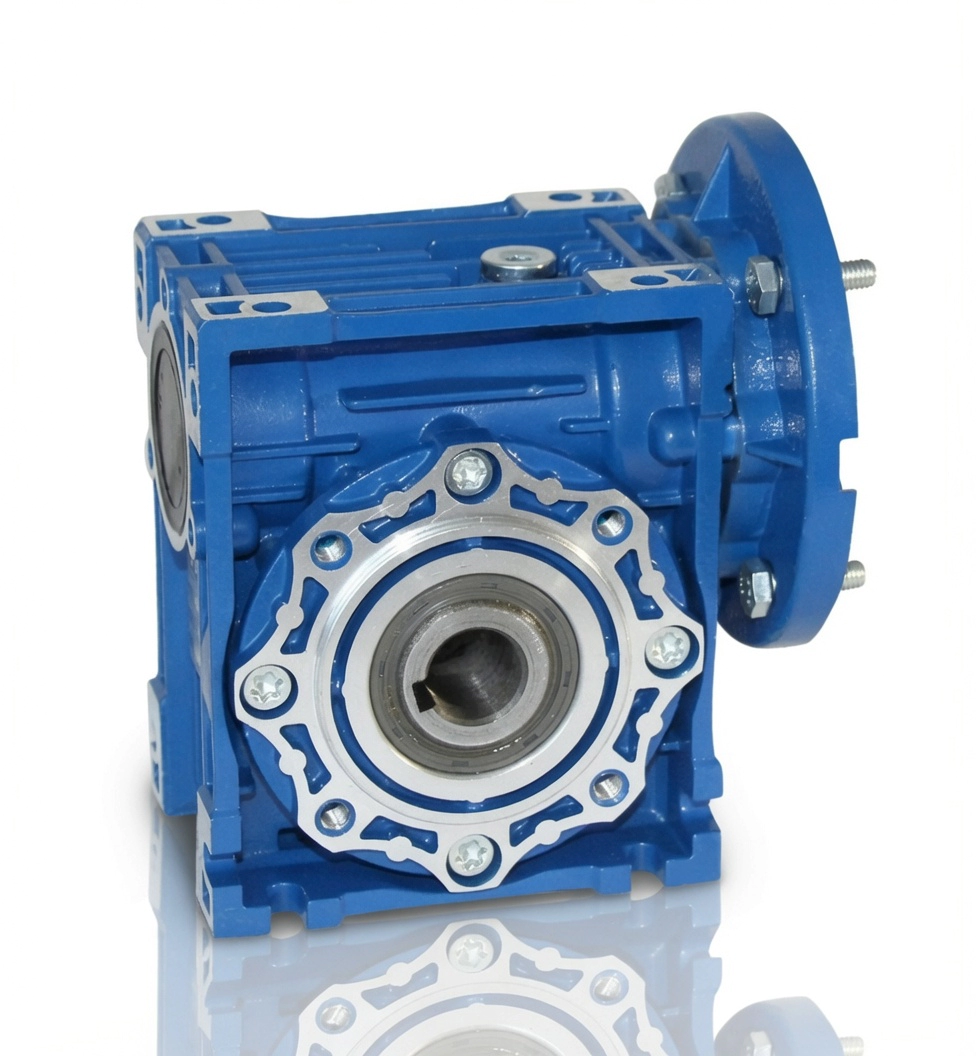
Disponible en tamaños de bastidor de 025 a 150. Reducción de una etapa de 5:1 a 100:1. Par de salida de hasta 4200 N·m. Carcasa de aluminio o hierro dúctil. Brida del motor IEC B5/B14. Protección IP65 estándar, IP66/IP67 opcional. Lubricación con aceite sintético o mineral.
Normas de cumplimiento y calidad
Sistema de gestión de calidad certificado. Cada unidad se fabrica e inspecciona bajo un SGC documentado con trazabilidad completa.
Con certificación CE conforme a la Directiva de Maquinaria de la UE. Ampliamente utilizada en proyectos de ingeniería en Australia y Nueva Zelanda.
Dimensiones de bridas y ejes según la norma IEC. Compatibilidad de montaje directo con todas las principales marcas de motores.
Resistente al polvo y a los chorros de agua a alta presión. El estándar para instalaciones exteriores en Australia.
Estudios de caso
Case Study 1 — Grain Storage Facility, Wagga Wagga NSW
Belt-and-Bucket Grain Elevator
Problema del cliente: A grain storage cooperative replacing drives on three 28-metre elevators. Previous helical-bevel units needed quarterly backstop adjustment. Two backstop failures caused chain reversal and bucket damage costing over $18,000 per incident.
Solución: NMRV-110 worm gearboxes (ratio 60:1, ductile iron, IP65, food-grade H1 lubricant) installed on all three elevator head drives, making the external backstop redundant.
Resultado: Zero reversal incidents over two full harvest seasons. Annual maintenance reduced from 22 to 4 labour-hours. Insurance claim history on the elevator line ended.
Case Study 2 — Copper Concentrate Handling Plant, South Australia
Chain Bucket Elevator — Copper Concentrate
Problema del cliente: Copper concentrate was causing rapid seal degradation. Seals failing within 8 months, leading to oil contamination of the concentrate stream — a process quality rejection issue.
Solución: NRV series worm gearboxes with upgraded double-lip FKM shaft seals and external labyrinth seal housings, IP66 rated for wash-down of the concentrate handling area.
Resultado: Seal life extended from 8 months to over 30 months. Zero oil contamination events in two years. Concentrate quality rejections attributed to lubricant contamination fell to zero.
Case Study 3 — Cement Clinker Elevator, Queensland
Hot Clinker Bucket Elevator
Problema del cliente: A cement plant’s clinker elevator operated in ambient temperatures exceeding 55°C near the kiln. Standard mineral oil was oxidising rapidly, causing varnish deposits and gearbox seizure every 4–5 months.
Solución: NRV-150 worm gearbox (ratio 40:1, cast iron) filled with synthetic PAO ISO VG 460 rated to 120°C continuous, plus forced-ventilation coupling to reduce heat transfer.
Resultado: Oil change interval extended from 4 months to 18 months. No seizure events in 24 months. Bearing temperature at the output shaft dropped by 14°C.
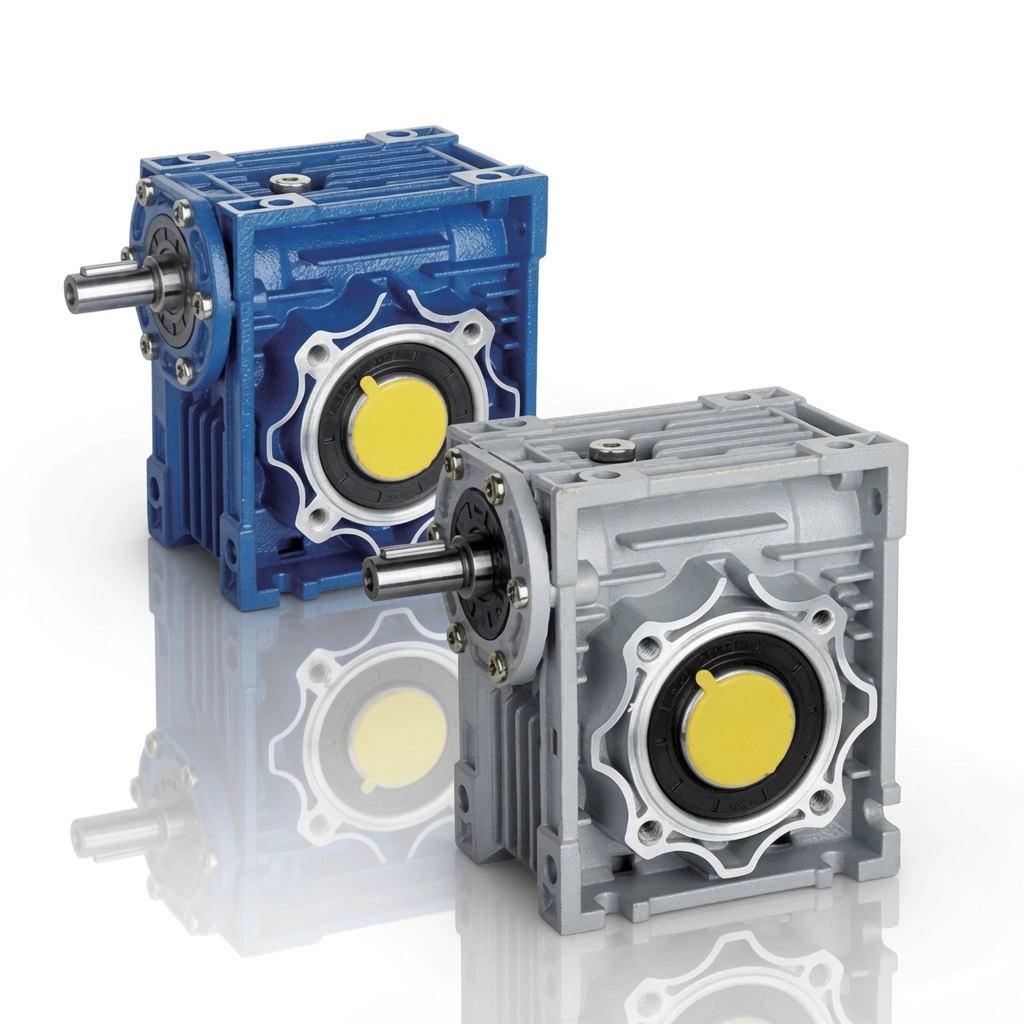
Reductores de tornillo sin fin de la serie NMRV / NRV — tamaños de bastidor 025 a 150, fabricados según la norma ISO 9001:2015
¿Por qué elegirnos?
Más de 20 años de experiencia en fabricación.
Producción con certificación ISO desde 2003. Reductores de tornillo sin fin enviados a más de 60 países.
Soporte técnico remoto
Diagnóstico mediante videollamada en todas las zonas horarias de Australia. Respuesta rápida sin necesidad de visitas presenciales.
Personalización OEM/ODM
Ejes no estándar, orificios huecos, bridas y relaciones personalizadas. Posibilidad de consultar los planos completos.
Valor directo de fábrica
Sin margen de distribuidor. Precios transparentes por volumen con importantes ahorros en pedidos repetidos.
En stock y envío rápido
Bastidores NMRV/NRV estándar en stock en almacén. Pedidos urgentes tramitados para envío exprés.
Preguntas frecuentes
Size Your Bucket Elevator Worm Drive — Contact Us Today
Nuestros ingenieros están preparados para recomendarle el modelo de reductor de tornillo sin fin, la relación de transmisión, la configuración del eje y el sistema de montaje adecuados para su aplicación.
Explora más en el página de aplicaciones o conozca más sobre nosotros en el Página "Acerca de nosotros".