Reductor de engranajes helicoidales para polipastos y grúas industriales
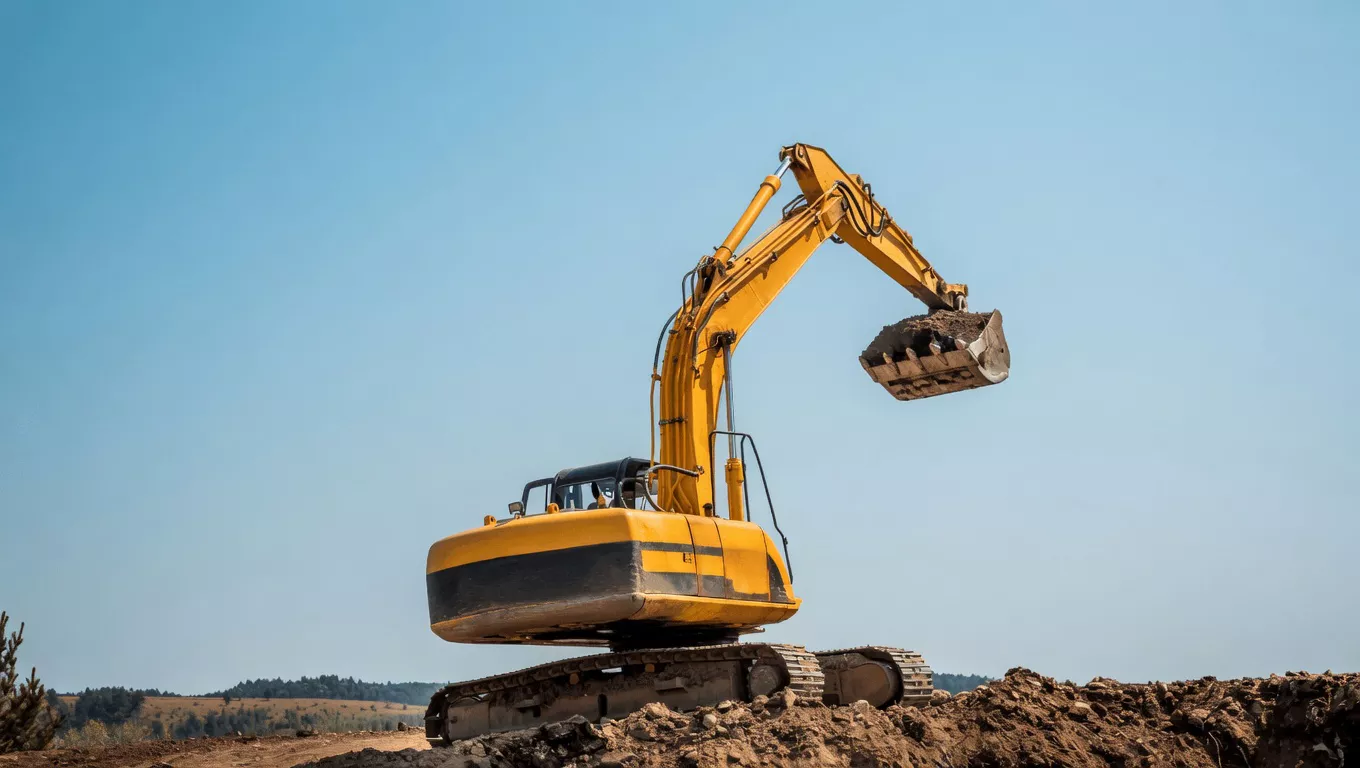
Los polipastos industriales, las grúas puente, los montacargas y los elevadores de materiales constituyen la infraestructura logística vertical de las plantas de fabricación, almacenes, centros de distribución y obras de construcción australianas. Transportan cargas que van desde unos pocos cientos de kilogramos hasta decenas de toneladas de forma fiable y segura a través de innumerables ciclos, con una vida útil que se mide en décadas. El requisito fundamental de cualquier accionamiento de polipasto o grúa —más allá de la capacidad de torsión— es la prevención incondicional del descenso incontrolado de la carga bajo cualquier circunstancia, incluyendo paradas del motor, fallos de alimentación y averías mecánicas.
El reductor de engranajes helicoidales Está en una posición privilegiada para cumplir con este requisito. La geometría de engranaje del tornillo sin fin crea una transmisión mecánicamente irreversible cuando está correctamente diseñada: la carga en el eje de salida no puede accionar en sentido inverso el eje de entrada; cualquier carga suspendida simplemente permanece en su lugar cuando el motor se detiene, sin necesidad de un freno electromagnético, un freno de resorte o una válvula de retención hidráulica independientes.
Este autobloqueo inherente no elimina la necesidad de frenos secundarios, según lo exige la norma AS 1418 (Normas Australianas para grúas, polipastos y cabrestantes) en todas las aplicaciones de elevación con acceso para personal, pero proporciona la principal capa de seguridad mecánica y reduce significativamente la carga sobre los frenos secundarios. En el caso de polipastos, accionamientos de cabrestantes y giros de grúas de pluma, donde el personal no corre riesgo por la carga suspendida, el autobloqueo de tornillo sin fin suele ser el único mecanismo de sujeción.
Aplicaciones y casos de uso en la industria
Los reductores de engranajes helicoidales se utilizan en toda la gama de equipos industriales de elevación y manipulación de materiales en Australia:
- Accionamientos de polipastos eléctricos de cadena — Reductor de tornillo sin fin compacto de una sola etapa en cuerpos de polipastos suspendidos por gancho
- Accionamientos de montacargas y ascensores de entreplanta — Accionamiento de tambor de velocidad intermedia para transferencia vertical de palés
- Accionamiento de desplazamiento transversal de la grúa puente — Reductor de tornillo sin fin en el accionamiento del carro para el posicionamiento de carga lateral
- Mecanismos de giro de grúas de pluma — Giro de 360° del brazo de la pluma con retención de carga autobloqueante en cualquier posición.
- Accionamientos de cabrestantes (cabrestantes para procesos industriales) — Accionamientos de tambor de cable de acero para aplicaciones de posicionamiento de carga
Especificaciones de materiales para el servicio de polipastos y grúas: Eje helicoidal de acero aleado carburizado y templado (HRC 58–62): la especificación de mayor resistencia al desgaste, adecuada para las altas presiones de contacto y los ciclos de carga repetidos del servicio de elevación. Rueda helicoidal de bronce de estaño fundido centrífugamente (C93700): seleccionada por su mayor límite elástico a compresión y mejor rendimiento bajo las inversiones de carga repetidas del ciclo de elevación. Carcasa de hierro dúctil GGG40 o hierro gris HT300. Rodamientos de rodillos cónicos en ambos ejes, de entrada y salida.
Cumplimiento de las normas australianas: Las normas AS 1418.1 (Requisitos generales para grúas, polipastos y cabrestantes) y AS 1418.3 (Grúas puente, pórtico, de portal y de pluma) definen los requisitos mínimos del sistema de accionamiento para equipos de elevación en Australia. Nuestros reductores de tornillo sin fin para aplicaciones de elevación están disponibles con cálculos de clase de servicio FEM y documentación para aplicaciones con clasificación M4–M6.
Especificaciones técnicas y guía de selección
Utilice la tabla a continuación para identificar el modelo apropiado. Los parámetros clave incluyen la relación de reducción, el par de salida, las dimensiones del eje y el material de la carcasa. Aplique siempre el correcto Factor de servicio (SF) para su ciclo de trabajo.
| Parámetro | Rango/Valor típico | Notas de selección |
|---|---|---|
| Relación | 20:1 – 100:1 etapa única | Configuraciones en tándem para viajes muy lentos o cargas de trabajo muy elevadas. |
| Par de salida | 200 – 4200 N·m | Seleccione la clase de servicio FEM, no solo el par SWL nominal. |
| Tipo de cojinete | Rodillo cónico (ejes de entrada y salida) | Obligatorio para cargas radiales/axiales combinadas en el servicio de elevación. |
| Material del eje del tornillo sin fin | Acero aleado, carburizado, HRC 58–62 | Máxima resistencia al desgaste para ciclos repetidos de carga y elevación. |
| Material de la rueda helicoidal | Bronce de estaño fundido centrífugamente C93700 | Alto límite elástico a compresión para ciclos repetidos de inversión de carga. |
| Material de vivienda | Hierro dúctil GGG40 | Alta rigidez; resiste la flexión causada por la deflexión de la cuerda/cadena. |
| Clase de protección | IP54 para interiores; IP65 para exteriores | Las instalaciones de grúas para exteriores y procesos húmedos requieren protección IP65. |
► Factor de servicio (FS): Carga uniforme SF=1,0 | Choque moderado SF=1,25–1,5 | Choque fuerte / 24 h continuo SF=1,75–2,0
► Temperatura ambiente: Las unidades estándar tienen una clasificación de -10 °C a +40 °C. Las instalaciones australianas con altas temperaturas ambiente (>45 °C) requieren lubricante de alta temperatura y una reducción de la capacidad térmica según la norma 15%.
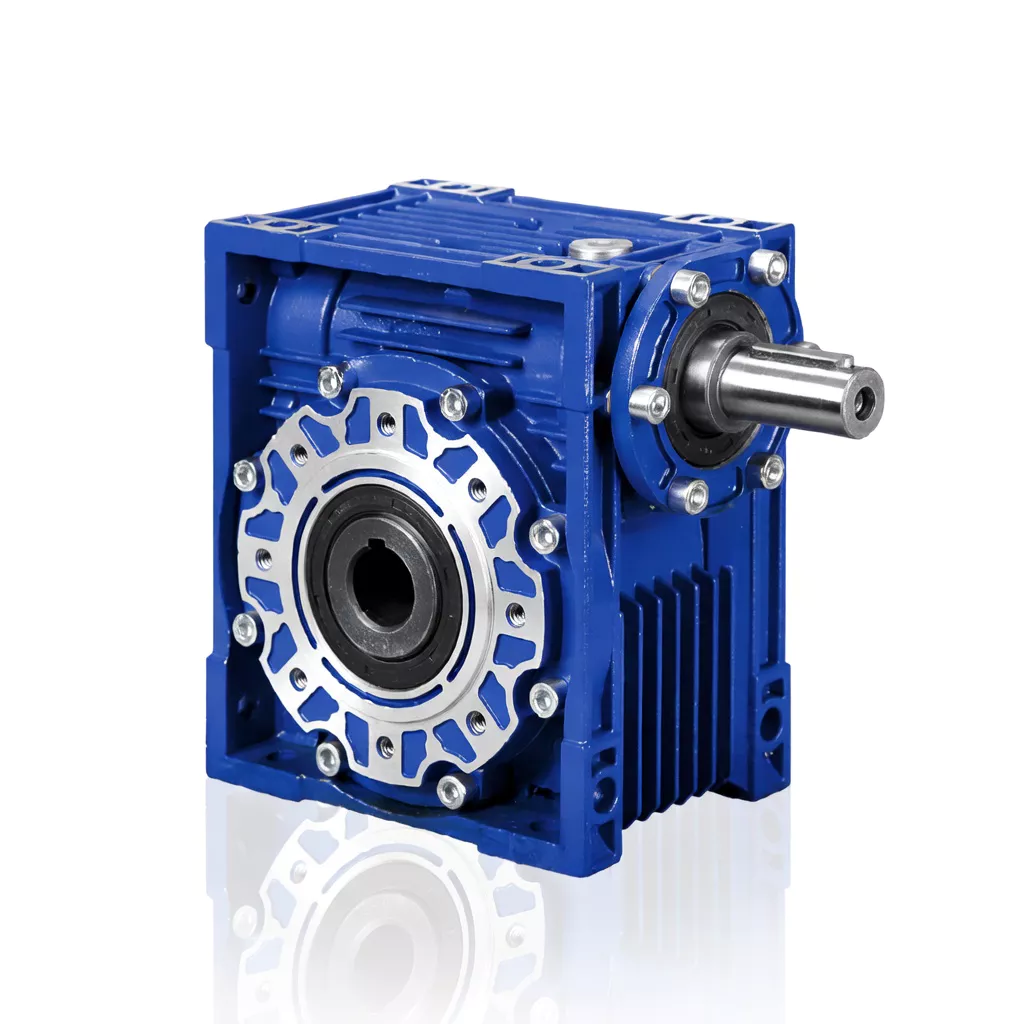
Disponible en tamaños de bastidor de 025 a 150. Reducción de una etapa de 5:1 a 100:1. Par de salida de hasta 4200 N·m. Carcasa de aluminio o hierro dúctil. Brida del motor IEC B5/B14. Protección IP65 estándar, IP66/IP67 opcional. Lubricación con aceite sintético o mineral.
Normas de cumplimiento y calidad
Sistema de gestión de calidad certificado. Cada unidad se fabrica e inspecciona bajo un SGC documentado con trazabilidad completa.
Con certificación CE conforme a la Directiva de Maquinaria de la UE. Ampliamente utilizada en proyectos de ingeniería en Australia y Nueva Zelanda.
Dimensiones de bridas y ejes según la norma IEC. Compatibilidad de montaje directo con todas las principales marcas de motores.
Resistente al polvo y a los chorros de agua a alta presión. El estándar para instalaciones exteriores en Australia.
Estudios de caso
Caso práctico 1 — Grúa puente en taller de fabricación de acero, Brisbane, Queensland
Grúa puente aérea — Accionamiento de desplazamiento transversal de 5 toneladas
Problema del cliente: Un taller de fabricación de acero cerca de Brisbane estaba experimentando un problema de deriva en el carro de su grúa puente de 5 toneladas: el carro cargado se desplazaba lateralmente cuando se desactivaba el motor de desplazamiento transversal, lo que provocaba un posicionamiento impreciso de la carga y un problema de seguridad que se señaló en una auditoría de WorkSafe Queensland.
Solución: El reductor de tornillo sin fin NMRV-110 (relación 60:1, hierro dúctil GGG40, rodamientos de rodillos cónicos, IP54) sustituyó a la unidad helicoidal del accionamiento del carro transversal. El sistema de autobloqueo del tornillo sin fin mantenía el carro en cualquier posición de la viga sin necesidad de corriente continua del motor.
Resultado: Cero incidentes de desviación del carro en los 20 meses posteriores a la instalación. Auditoría de WorkSafe finalizada. Los operarios podían posicionar las cargas con una precisión de 30 mm sin necesidad de reajustes.
Caso práctico 2: Montacargas para materiales de construcción, Sídney, Nueva Gales del Sur.
Elevador de mercancías para obras de construcción — 750 kg SWL
Problema del cliente: Un montacargas en una obra de construcción en el distrito financiero de Sídney presentaba un desgaste excesivo en el freno de fricción: este se activaba y desactivaba entre 80 y 120 veces por jornada laboral con carga completa, lo que provocaba el desgaste del forro del freno cada 6 semanas. Su reemplazo ocasionaba paradas del montacargas de 4 horas durante la fase crítica de la estructura.
Solución: La caja de engranajes helicoidales NMRV-130 (relación 80:1, hierro dúctil, rodillos cónicos, IP54) sustituyó a la unidad helicoidal. El autobloqueo del tornillo sin fin redujo drásticamente la carga sobre el freno de fricción, que ahora funcionaba principalmente como sistema de respaldo de emergencia.
Resultado: El intervalo de reemplazo de las pastillas de freno se extendió de 6 semanas a más de 18 meses. Se eliminaron las interrupciones relacionadas con los frenos durante la fase crítica del proyecto.
Caso práctico 3: Grúa de pluma en planta de ensamblaje de automóviles, Adelaida, Australia Meridional.
Accionamiento giratorio para grúa pluma de 250 kg
Problema del cliente: Una planta de ensamblaje de componentes automotrices en Adelaida estaba experimentando fallas en los frenos de giro de 12 grúas de pluma utilizadas para la manipulación de bloques de motor. Los frenos eléctricos de giro fallaban debido al sobrecalentamiento: las operaciones de ensamblaje requerían entre 30 y 50 correcciones de posición de giro por hora, y las bobinas de freno estaban superando su capacidad térmica.
Solución: Las cajas de engranajes helicoidales NMRV-090 (relación 40:1, hierro dúctil, IP54) sustituyeron a los sistemas de engranajes rectos existentes en las 12 grúas de pluma. El autobloqueo del tornillo sin fin eliminó por completo la necesidad del freno de giro.
Resultado: Se retiraron de servicio los 12 frenos de giro de la grúa de pluma. Cero fallas por sobrecalentamiento de los frenos en 30 meses. Se eliminó el costo anual de reemplazo de los frenos eléctricos: estimado en $9,600 por año.
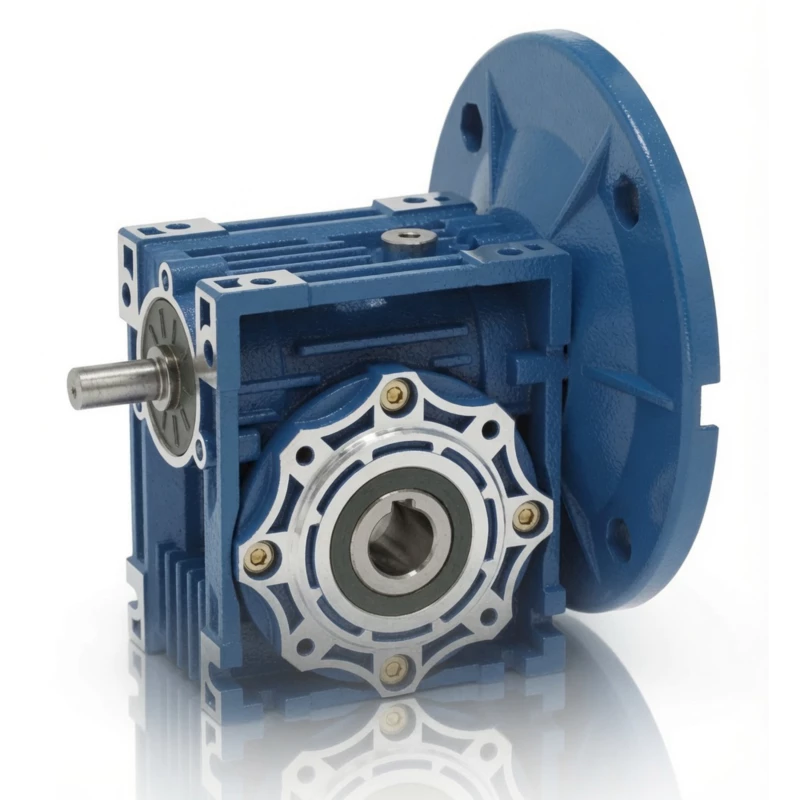
Reductores de tornillo sin fin de la serie NMRV / NRV — tamaños de bastidor 025 a 150, fabricados según la norma ISO 9001:2015
¿Por qué elegirnos?
Más de 20 años de experiencia en fabricación.
Producción con certificación ISO desde 2003. Reductores de tornillo sin fin enviados a más de 60 países.
Soporte técnico remoto
Diagnóstico mediante videollamada en todas las zonas horarias de Australia. Respuesta rápida sin necesidad de visitas presenciales.
Personalización OEM/ODM
Ejes no estándar, orificios huecos, bridas y relaciones personalizadas. Posibilidad de consultar los planos completos.
Valor directo de fábrica
Sin margen de distribuidor. Precios transparentes por volumen con importantes ahorros en pedidos repetidos.
En stock y envío rápido
Bastidores NMRV/NRV estándar en stock en almacén. Pedidos urgentes tramitados para envío exprés.
Preguntas frecuentes
Obtenga asistencia de nuestros ingenieros para el dimensionamiento de polipastos y sistemas de accionamiento de grúas.
Nuestros ingenieros están preparados para recomendarle el modelo de reductor de tornillo sin fin, la relación de transmisión, la configuración del eje y el sistema de montaje adecuados para su aplicación.
Explora más en el página de aplicaciones o conozca más sobre nosotros en el Página "Acerca de nosotros".