Réducteur à vis sans fin pour systèmes d'entraînement de moissonneuses-batteuses
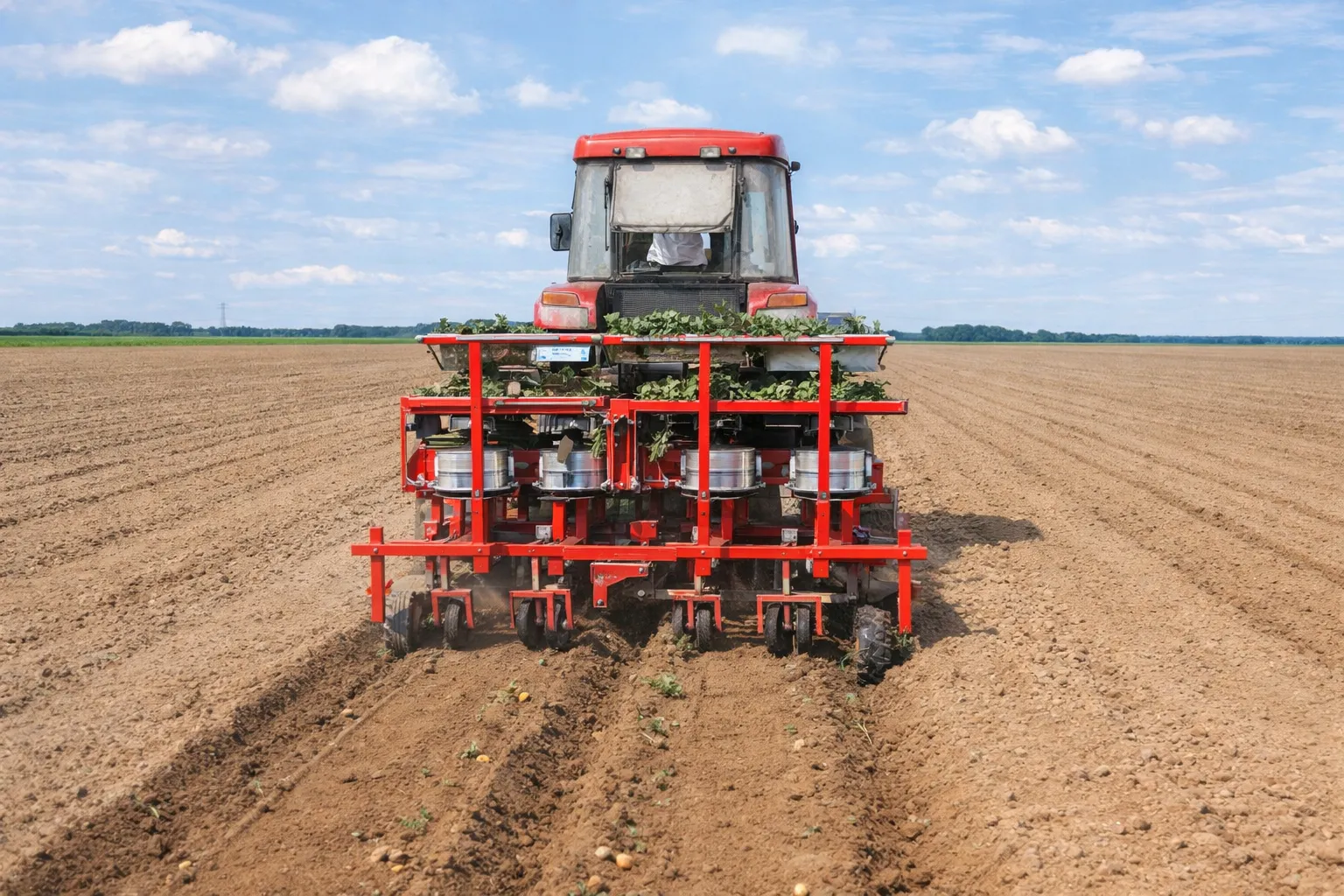
Modern agricultural harvesters — combine harvesters, fodder harvesters, cotton pickers, and cane cutters — are complex machines with multiple simultaneous drive systems, each requiring precise speed coordination and reliable torque delivery across extended harvest days. The Réducteur à vis sans fin serves as the drive component for cutting, threshing, augering, and residue processing sub-systems where high reduction ratios and compact installation are required alongside robust performance in the harsh Australian paddock environment.
Australian harvesters face particular challenges: grain crops with varying moisture content and stalk strength create unpredictable cutting resistance; rocky or uneven terrain subjects drive components to vibration and shock loads; and the remote location of most Australian farms means component failures during the narrow harvest window — often just 2–3 weeks — have disproportionately high economic impact. The worm reducer’s simple, sealed construction and minimal maintenance profile are significant advantages in this context.
Precision speed control is also increasingly important as GPS-guided automated harvesting becomes standard practice on large Australian properties. Worm reducers with VFD-controlled motors allow section-control systems to vary header and auger speeds dynamically, optimising throughput across variable crop densities without mechanical ratio changes.
Applications industrielles et cas d'utilisation
Worm gearboxes serve multiple roles within modern harvester drive systems:
- Header auger drive — moves cut crop toward the centre feed point at controlled speed
- Feeder house drive — controls the speed of the inclined conveyor feeding crop to the threshing drum
- Straw residue chopper drive — low-speed input to variable-speed residue spreader mechanism
- Grain unloading auger drive — slow-speed large-diameter horizontal and vertical unloading auger
- Crop divider and reel drive — precise speed matching with forward travel speed for even crop pick-up
Material specification for harvester service: Worm shaft in alloy steel (carburised and quenched, surface precision-ground). Worm wheel in cast phosphor bronze — selected for its impact absorption capability when the header auger or feeder encounters an unexpected obstruction. Housing in cast iron with IP54 minimum. Double-lip shaft seals on both input and output are standard.
Variable speed capability: By varying the motor frequency from 25–60 Hz, the output speed can be varied ±40% from nominal without changing the mechanical reduction ratio. This allows the operator to optimise cut speed for crop density and moisture conditions.
Spécifications techniques et guide de sélection
Utilisez le tableau ci-dessous pour identifier le modèle approprié. Les paramètres clés comprennent le rapport de réduction, le couple de sortie, les dimensions de l'arbre et le matériau du carter. Appliquez toujours le bon réglage. Facteur de service (SF) pour votre cycle de service.
| Paramètre | Plage/valeur typique | Notes de sélection |
|---|---|---|
| Rapport | 10:1 – 60:1 typical | Matches harvester drive speeds from 540 RPM PTO input |
| Couple de sortie | 100 – 1,800 N·m | SF 1.25 for header/feeder service; 1.5 for chopper drives |
| Connexion d'entrée | Flanged or solid shaft | CEI 60034 B5/B14 or custom to OEM header |
| Arbre de sortie | arbre claveté massif | Hollow bore option for direct auger shaft coupling |
| Matériau du boîtier | Cast Iron, IP54/IP65 | IP65 for unloading auger exposed to weather during operation |
| Vibration Rating | High — taper roller bearings | Taper rollers mandatory for header vibration duty |
| Lubrification | SAE 90 mineral; synthetic PAO option | Synthetic recommended for 12+ hour continuous harvest days |
► Facteur de service (SF) : Charge uniforme SF=1,0 | Choc modéré SF=1,25–1,5 | Choc important / 24 h en continu SF=1,75–2,0
► Température ambiante : Unités standard conçues pour une température ambiante de –10°C à +40°C. Les sites australiens à température ambiante élevée (>45°C) nécessitent un lubrifiant haute température et une réduction de puissance thermique 15%.
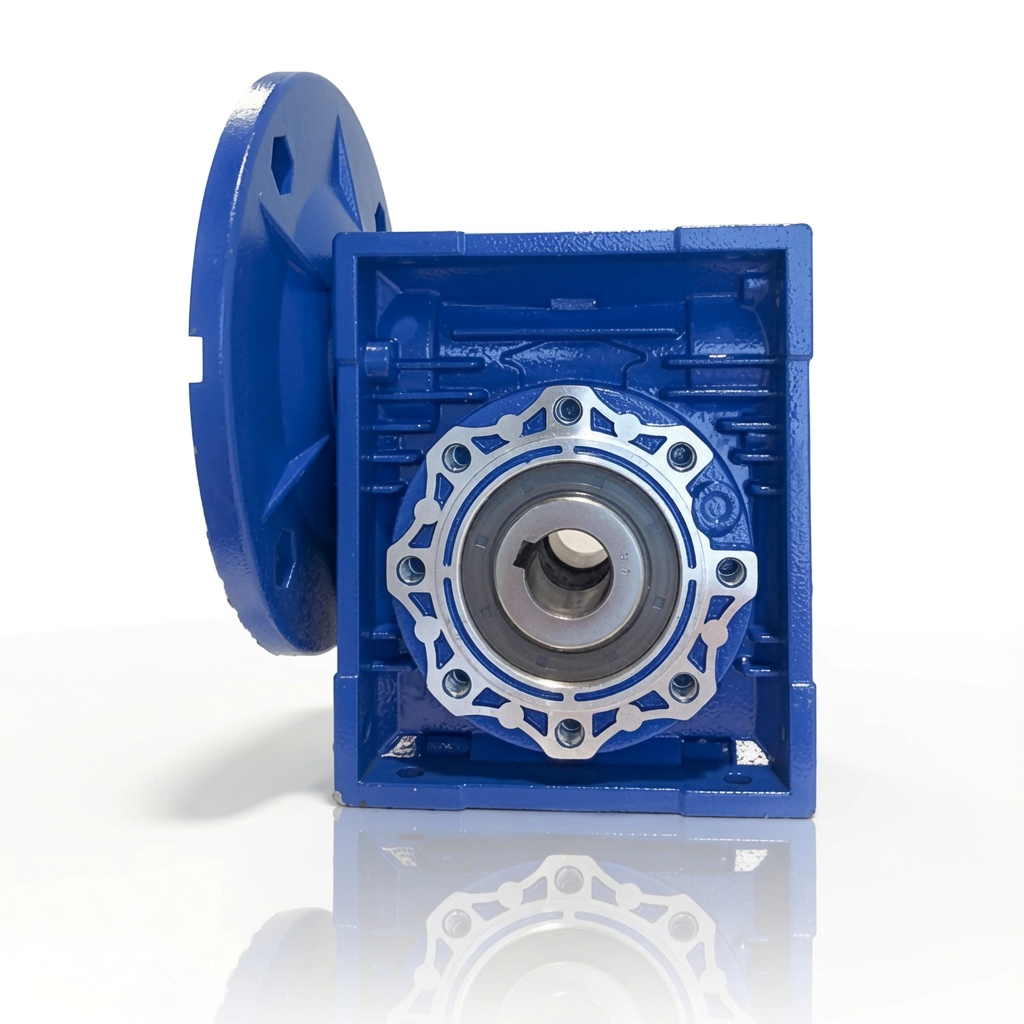
Disponible en tailles de châssis 025 à 150. Rapports de réduction mono-étagés de 5:1 à 100:1. Couple de sortie jusqu'à 4 200 N·m. Carter en aluminium ou en fonte ductile. Bride moteur IEC B5/B14. Indice de protection IP65 de série, IP66/IP67 en option. Lubrification à l'huile synthétique ou minérale.
Normes de conformité et de qualité
Système de gestion de la qualité certifié. Chaque unité est fabriquée et inspectée conformément à un système de gestion de la qualité documenté, avec une traçabilité complète.
Marquage CE conforme à la directive européenne sur les machines. Largement utilisé dans les projets d'ingénierie australiens et néo-zélandais.
Dimensions de la bride et de l'arbre conformes aux normes CEI. Compatibilité à montage direct avec toutes les grandes marques de moteurs.
Étanche à la poussière et résistante aux jets d'eau haute pression. La norme pour les installations extérieures australiennes.
Études de cas
Case Study 1 — Wheat Combine Harvester, Mallee Region VIC
Grain Unloading Horizontal Auger Drive
Point sensible du client : A wheat farmer was experiencing gearbox oil leaks on the horizontal grain unloading auger contaminating the grain sample — a Grade 1 quality penalty in Australian wheat markets. The seal failures were occurring after approximately 200 operating hours each season.
Solution: NMRV-090 worm gearbox (ratio 20:1, upgraded FKM double-lip seals, IP65, synthetic lubricant) was installed. FKM seals provide 3× the service life of standard NBR seals under constant UV and temperature cycling.
Résultat: Zero oil contamination events over two subsequent harvest seasons (approximately 380 operating hours). The farmer’s grain samples were graded APW1 without oil penalty.
Case Study 2 — Fodder Harvester Chopper Drive, Gippsland VIC
Straw Residue Chopper and Spreader Drive
Point sensible du client : A silage contractor’s fodder harvester was suffering premature gearbox failure on the straw chopper drive approximately every 6–8 weeks during the silage season. The chopper frequently encountered tangled grass causing sharp torque spikes.
Solution: NMRV-110 worm gearbox (ratio 30:1, SF=1.75 output torque selected, taper roller bearings, IP54) was installed. The SF=1.75 selection provided adequate margin for torque spike events.
Résultat: Gearbox service life extended from 6–8 weeks to the full season (approximately 600 operating hours). Maintenance cost on the chopper drive dropped by over 70%.
Case Study 3 — Cane Harvester Topper Drive, Bundaberg QLD
Cane Topper Disc Drive
Point sensible du client : A Queensland cane grower’s harvester topper disc drive was corroding rapidly during the off-season. The combination of fertiliser residue in the soil, irrigation water spray, and high humidity was attacking the painted cast iron housing.
Solution: NRV series worm gearbox with 2-part epoxy anti-corrosion coating (IP65, synthetic lubricant, FKM seals) replaced the standard-painted unit.
Résultat: No coating failure or housing corrosion observed over two full cane seasons (approximately 800 operating hours).
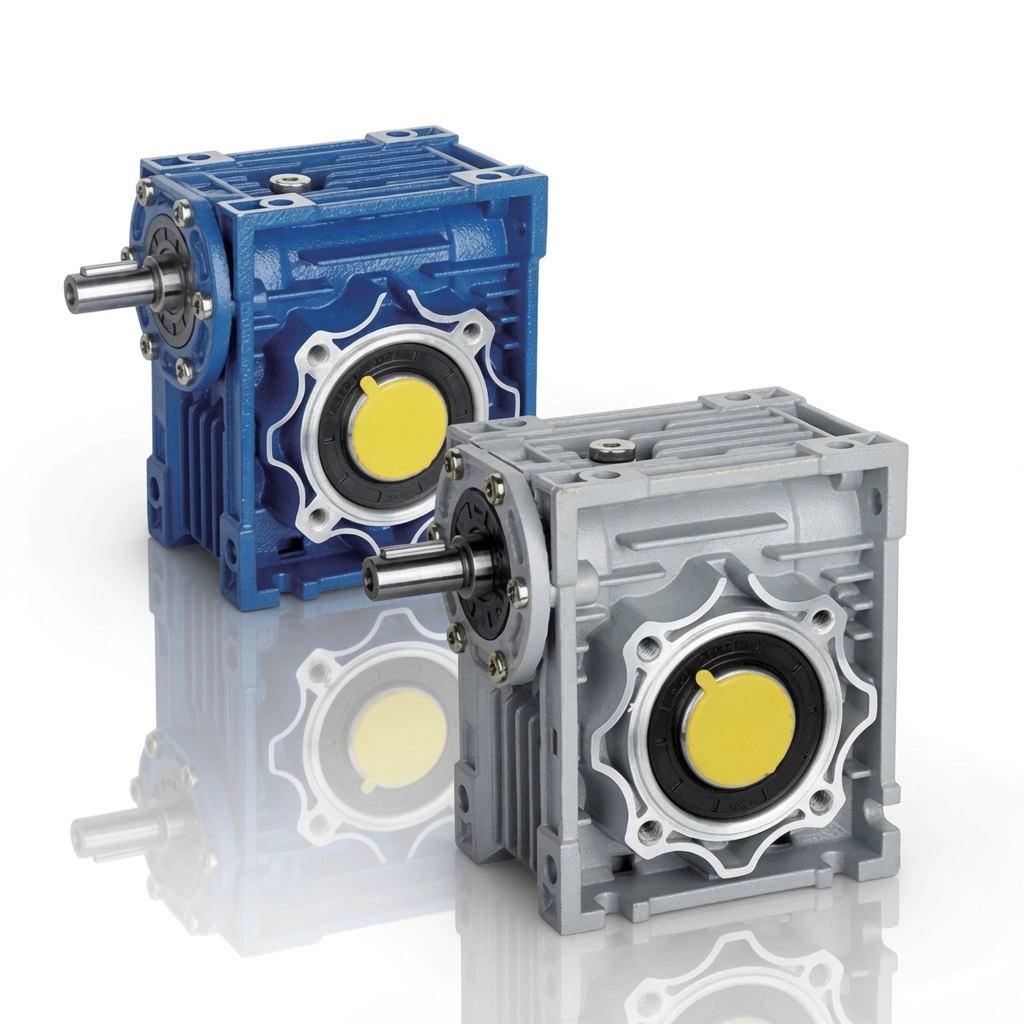
Réducteurs à vis sans fin séries NMRV / NRV — tailles de châssis 025 à 150, fabriqués selon la norme ISO 9001:2015
Pourquoi nous choisir ?
Plus de 20 ans d'expérience dans la fabrication
Production certifiée ISO depuis 2003. Réducteurs à vis sans fin expédiés dans plus de 60 pays.
Assistance technique à distance
Diagnostic par appel vidéo dans tous les fuseaux horaires australiens. Intervention rapide sans déplacement sur site.
Personnalisation OEM/ODM
Arbres non standard, alésage creux, brides et rapports sur mesure. Analyse complète des plans disponible.
Valeur directe du fabricant
Aucune marge pour les distributeurs. Tarification transparente sur les volumes avec des économies importantes sur les commandes répétées.
En stock et expédition rapide
Cadres NMRV/NRV standard en stock. Commandes urgentes traitées pour livraison express.
Foire aux questions
Contact Us for Harvester Drive Selection Support
Nos ingénieurs sont prêts à vous recommander le modèle de réducteur à vis sans fin, le rapport de réduction, la configuration d'arbre et le mode de montage les mieux adaptés à votre application.
Explorez davantage sur le page des applications ou découvrez-nous sur le page À propos de nous.