Ingranaggio a vite senza fine per alimentatori a vite
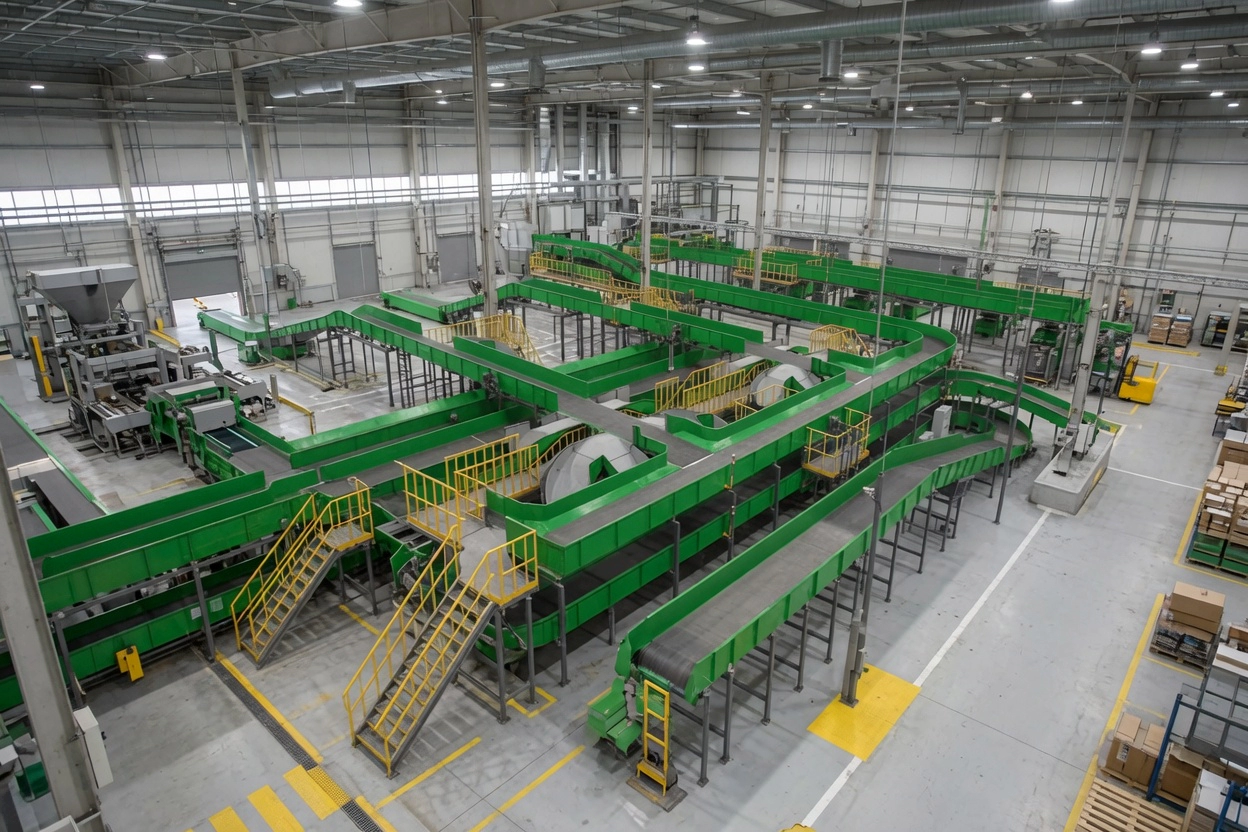
Screw feeders transfer bulk material from a hopper or silo outlet to the next process stage at a controlled volumetric rate. The drive unit must deliver stable, low-speed torque continuously, accommodate the variable resistance as material compacts and arches in the hopper throat, and maintain set speed without hunting. The trasmissione a vite senza fine is the industry-standard drive for screw feeders due to its compact single-stage high reduction, right-angle output, and ability to maintain exact output speed under variable load without electronic correction.
In Australian mining, cement, and chemical processing, screw feeders handling fine abrasive powders — iron ore fines, cement raw meal, fly ash, lime — require drive units completely sealed against ingress. The worm gearbox’s low-profile sealed housing and standard IP65 protection make it the correct choice for dusty material handling environments.
The compact form factor of worm gearboxes — with output shafts available in solid and hollow bore configurations — adapts directly to the screw feeder’s central tube structure, enabling shaft-through mounting without external couplings that could become packed with process material.
Applicazioni e casi d'uso nel settore industriale
Worm gear drives appear throughout the screw feeder circuit in processing plants:
- Silo and hopper discharge screw feeders — constant low-speed material extraction against variable head pressure
- Loss-in-weight feeder drive — precise rate control for batching and dosing operations
- Twin-screw mixer drive — coordinated rotation of two screws at matched speeds
- Inclined screw elevator — upward material transfer at angles to 45°; self-lock prevents material rollback
- Rotary valve (airlock) drive — slow precision rotation of rotor between pressure zones
Material specification for screw feeder service: Worm shaft in carbon steel with surface hardening and precision-ground helical thread. Worm wheel in cast phosphor bronze — critical for the sustained sliding contact typical of screw feeder operation. Housing in grey cast iron with heat dissipation fins. Sealed input and output penetrations to IP65.
Selection principle: Screw feeder drives are classified as uniform-load continuous duty (SF=1.0 for standard; SF=1.25 for feeders handling material that may compact). Output speed is typically 2–20 RPM for volumetric feeders and 20–80 RPM for transfer screws.

Specifiche tecniche e guida alla selezione
Utilizzare la tabella sottostante per identificare il modello appropriato. I parametri chiave includono il rapporto di riduzione, la coppia di uscita, le dimensioni dell'albero e il materiale dell'alloggiamento. Applicare sempre il corretto Fattore di servizio (SF) per il tuo ciclo di lavoro.
| Parametro | Intervallo/valore tipico | Note sulla selezione |
|---|---|---|
| Rapporto | 20:1 – 100:1 | Covers output speeds 14–70 RPM at 1,400 RPM motor input |
| Coppia in uscita | 10 – 4,200 N·m | Frame 025–150; confirm SF before frame selection |
| Albero di ingresso | IEC 60034 B5/B14 flange | Direct-mount to 4-pole standard motors |
| Albero di uscita | Solid or hollow bore | Hollow bore enables direct screw shaft pass-through |
| Materiale per alloggi | Grey Iron with fin casting | Thermal management for continuous low-speed operation |
| Lubrificazione | Oil bath, standard mineral ISO VG 220 | Synthetic PAO for 24-hour continuous duty |
| Classe di protezione | IP65 standard | Critical for fine powder and dust environments |
► Fattore di servizio (SF): Carico uniforme SF=1,0 | Urto moderato SF=1,25–1,5 | Urto pesante / 24 ore continue SF=1,75–2,0
► Temperatura ambiente: Le unità standard hanno una temperatura nominale compresa tra -10 °C e +40 °C. I siti australiani con temperature ambiente elevate (>45 °C) richiedono un lubrificante per alte temperature e una riduzione di temperatura 15%.
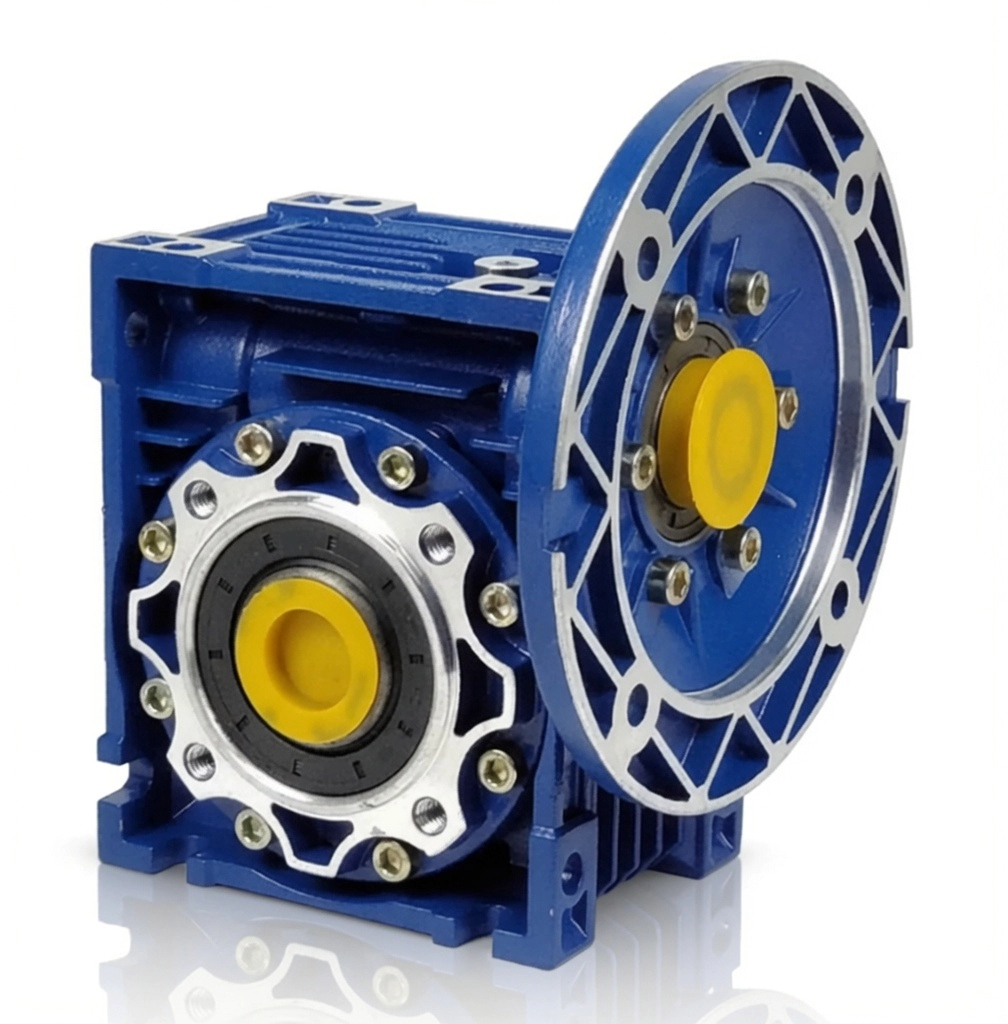
Disponibile nelle taglie di telaio da 025 a 150. Rapporti di riduzione monostadio da 5:1 a 100:1. Coppia in uscita fino a 4.200 N·m. Alloggiamento in alluminio o ghisa sferoidale. Flangia motore IEC B5/B14. Grado di protezione IP65 standard, IP66/IP67 opzionale. Lubrificazione con olio sintetico o minerale.
Conformità e standard di qualità
Sistema di gestione della qualità certificato. Ogni unità viene prodotta e ispezionata secondo un sistema di gestione della qualità documentato e con piena tracciabilità.
Marcatura CE conforme alla Direttiva Macchine dell'UE. Ampiamente utilizzata nei progetti di ingegneria in Australia e Nuova Zelanda.
Dimensioni standard IEC per flange e alberi. Compatibilità diretta con tutte le principali marche di motori.
Resistente alla polvere e ai getti d'acqua ad alta pressione. Lo standard per le installazioni esterne in Australia.
Casi di studio
Case Study 1 — Cement Raw Mill Screw Feeder, Victoria
Limestone Silo Discharge Screw Feeder
Punto critico per il cliente: A cement plant’s limestone silo screw feeder was overheating during the 22-hour daily operating cycle — housing temperature reaching 92°C and tripping the motor protection relay at hour 18 of each shift.
Soluzione: Upgraded from an undersized NMRV-063 to NMRV-090 (same ratio 40:1) with synthetic PAO ISO VG 320. The larger frame reduced equilibrium operating temperature by 18°C. A partially clogged outlet adding 35% to running torque was also cleared.
Risultato: Housing temperature stabilised at 67°C during the full 22-hour shift with no thermal trips. The synthetic lubricant oil change interval extended to 5,000 hours.
Case Study 2 — Chemical Dosing Screw, Perth WA
Loss-in-Weight Lime Dosing Feeder
Punto critico per il cliente: A water treatment plant’s lime dosing screw feeder was producing inconsistent dose rates — gearbox output varying ±4 RPM around the setpoint due to backlash, causing pH control instability in the clarifier circuit.
Soluzione: NMRV-040 worm gearbox (ratio 60:1) replaced the helical unit. Worm mesh eliminates backlash at low speeds, reducing speed variation to below ±0.2 RPM at the 8 RPM setpoint.
Risultato: Clarifier pH consistency improved from ±0.3 pH to ±0.05 pH. Lime consumption reduced by 7% through more precise dosing.
Case Study 3 — Grain Auger Elevator, Southern Queensland
Inclined Grain Auger (30° inclination)
Punto critico per il cliente: A grain storage facility’s 30° inclined auger was allowing grain to roll back through the auger flights after each operational stop. A separate backstop ratchet mechanism was jamming on fine grain particles.
Soluzione: NMRV-063 worm gearbox (ratio 40:1, IP65, food-grade H1 lubricant) replaced the open helical gearbox and ratchet combination. The worm self-lock prevented any rollback on stop.
Risultato: Grain rollback eliminated entirely. The ratchet mechanism and its quarterly maintenance requirement were removed from the site maintenance schedule. The same model was subsequently installed on seven further auger points at the facility.
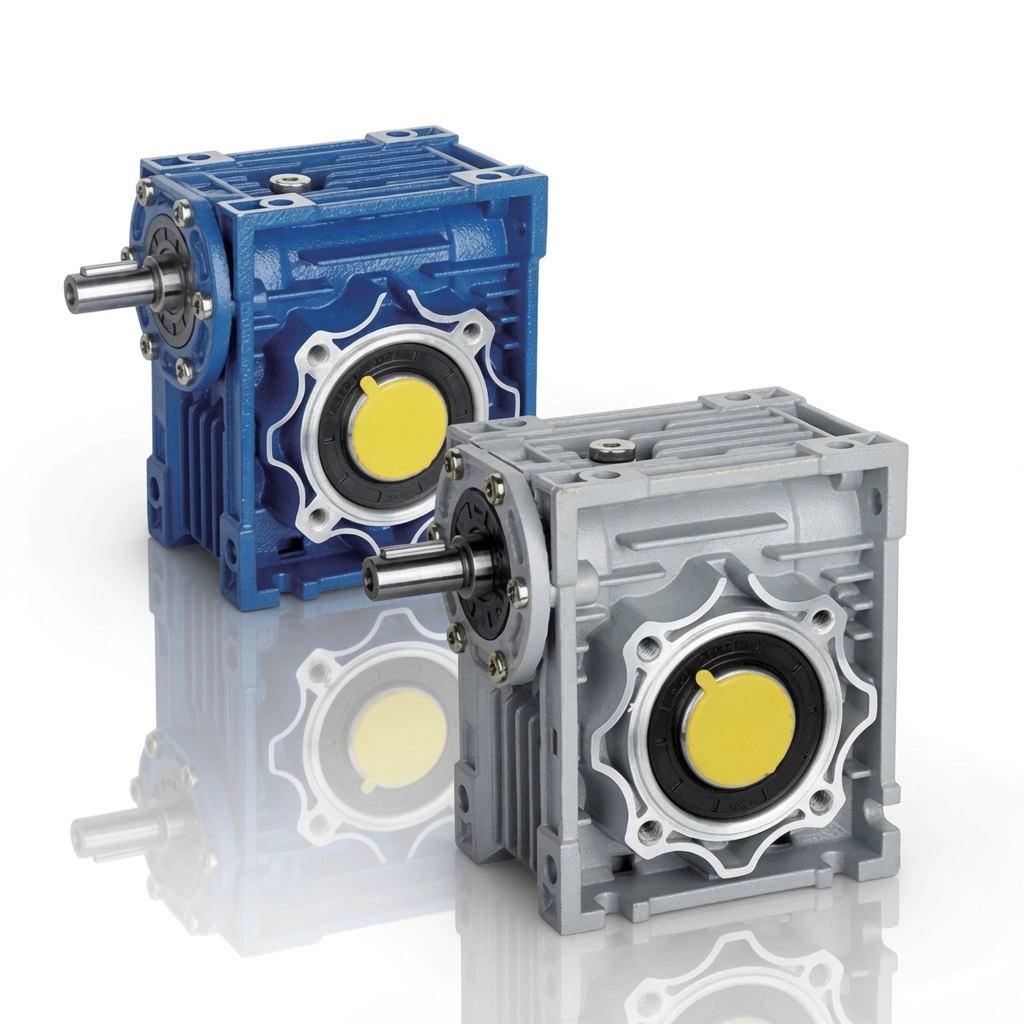
Riduttori a vite senza fine serie NMRV / NRV — taglie telaio da 025 a 150, fabbricati secondo la norma ISO 9001:2015
Perché scegliere noi?
Oltre 20 anni di esperienza nella produzione
Produzione certificata ISO dal 2003. Riduttori a vite senza fine spediti in oltre 60 paesi.
Assistenza tecnica da remoto
Diagnostica tramite videochiamata in tutti i fusi orari australiani. Risposta rapida senza necessità di visite in loco.
Personalizzazione OEM/ODM
Alberi non standard, fori cavi, flange e rapporti personalizzati. Disponibile la revisione completa dei disegni.
Valore direttamente dalla fabbrica
Nessun margine di distribuzione. Prezzi trasparenti per acquisti in grandi quantità, con notevoli risparmi sugli ordini ripetuti.
Disponibilità immediata e spedizione rapida.
Telai standard NMRV/NRV disponibili a magazzino. Gli ordini urgenti vengono spediti con corriere espresso.
Domande frequenti
Get Free Screw Feeder Drive Sizing Assistance
I nostri ingegneri sono pronti a consigliarvi il modello di riduttore a vite senza fine, il rapporto di trasmissione, la configurazione dell'albero e la disposizione di montaggio più adatti alla vostra applicazione.
Scopri di più su pagina delle applicazioni oppure scopri di più su di noi su pagina Chi siamo.