Worm Gear Reducer for Mining Crushers
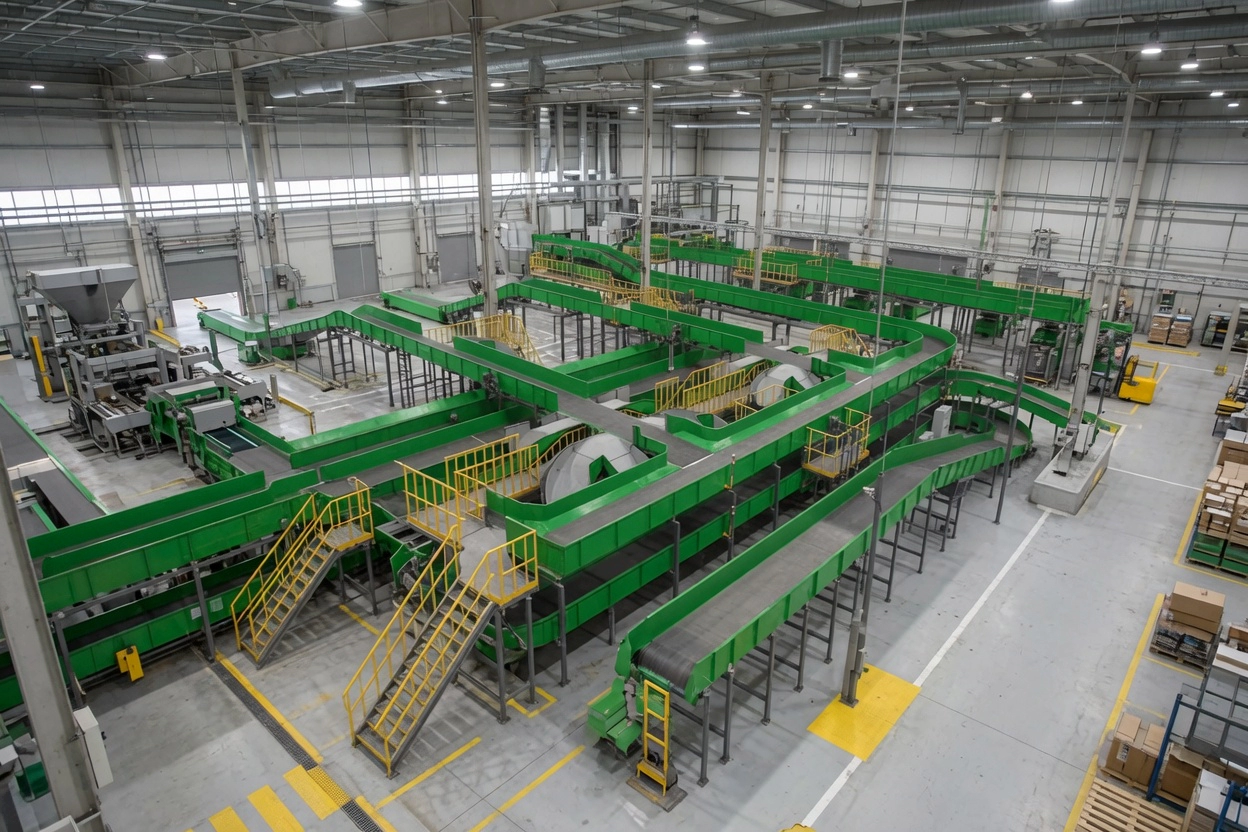
Mining crushers — jaw crushers, cone crushers, and roll crushers — represent some of the most mechanically demanding environments in heavy industry. They impose extreme impact loads, high starting torques, and continuous vibration on every drive component. The reduktor przekładni ślimakowej deployed in crusher auxiliary and feeder drives delivers high reduction ratios in a compact envelope, ensuring full drive torque from a standard motor frame even in the space-constrained confines of a mine shaft or processing plant.
While the primary crusher drive may use a direct-drive or fluid coupling arrangement, worm gearboxes serve critical roles in the crusher circuit: driving the vibrating grizzly feeder that regulates ore feed rate, actuating the CSS adjustment mechanism, driving the lubrication oil pump motor on large gyratory crushers, and controlling the apron feeder beneath the jaw crusher discharge.
In all these roles, the worm reducer’s defining advantage is torque multiplication at compact size — reduction ratios up to 100:1 from a single stage allow a small motor to overcome the starting inertia and shock loads characteristic of crusher circuits.
Zastosowania przemysłowe i przypadki użycia
In a typical crusher plant layout, worm gearboxes appear at multiple points in the circuit:
- Vibrating grizzly feeder drives — eccentric mass adjustment and feed rate control
- CSS adjustment actuators on cone crushers — precise low-speed setting changes under hydraulic load
- Apron feeder drives beneath jaw crushers — high starting torque against loaded apron pans
- Roll crusher drives (secondary stage) — low-speed high-torque direct drive of crushing rolls
- Lubrication pump drives on large gyratory crushers — slow continuous pump rotation
Material specifications for crusher duty: Worm shaft in carburised-and-quenched alloy steel (HRC 60–62). Worm wheel in special alloy bronze with higher tin content for improved impact resistance. Housing in ductile iron GGG40 with IP65 sealing as minimum — IP66 recommended near crusher discharge zones where water-and-fines slurry splashing is common.
Shock load and service factor: Crusher circuits are classified as heavy-shock applications with service factor SF=1.75–2.0. This means the gearbox must be selected with a rated output torque at least 1.75× the calculated application torque. Undersizing a worm gearbox in a crusher circuit leads to premature bronze wheel wear and thermal overload.
Specyfikacje techniczne i przewodnik wyboru
Skorzystaj z poniższej tabeli, aby wybrać odpowiedni model. Kluczowe parametry to przełożenie, moment obrotowy wyjściowy, wymiary wału i materiał obudowy. Zawsze stosuj właściwe Współczynnik usług (SF) dla Twojego cyklu pracy.
| Parametr | Typowy zakres / wartość | Notatki dotyczące wyboru |
|---|---|---|
| Stosunek | 20:1 – 100:1 recommended | Higher ratios for very slow feeder or actuator drives |
| Output Torque (SF=1.0) | Do 4200 N·m | Apply SF 1.75–2.0 for crusher circuit selection |
| Wał wejściowy | IEC B5/B14 flange | IEC 60034 — direct-mount to standard motors |
| Output Shaft | 25 – 50 mm solid or hollow bore | Hollow bore recommended for direct roll-crusher shaft coupling |
| Materiał obudowy | Żeliwo sferoidalne GGG40 | Mandatory for shock-load crusher circuit service |
| Bearing Type | Taper roller (input + output) | Required for combined radial/axial load in crusher duty |
| Klasa ochrony | IP65 minimum; IP66 preferred | Near crusher discharge and slurry zones specify IP66 |
► Współczynnik usług (SF): Obciążenie równomierne SF=1,0 | Umiarkowany wstrząs SF=1,25–1,5 | Silny wstrząs / 24 h ciągły SF=1,75–2,0
► Temperatura otoczenia: Standardowe jednostki o klasie odporności od –10°C do +40°C. W australijskich zakładach o wysokiej temperaturze otoczenia (>45°C) wymagany jest smar wysokotemperaturowy i obniżenie wartości znamionowej temperatury 15%.
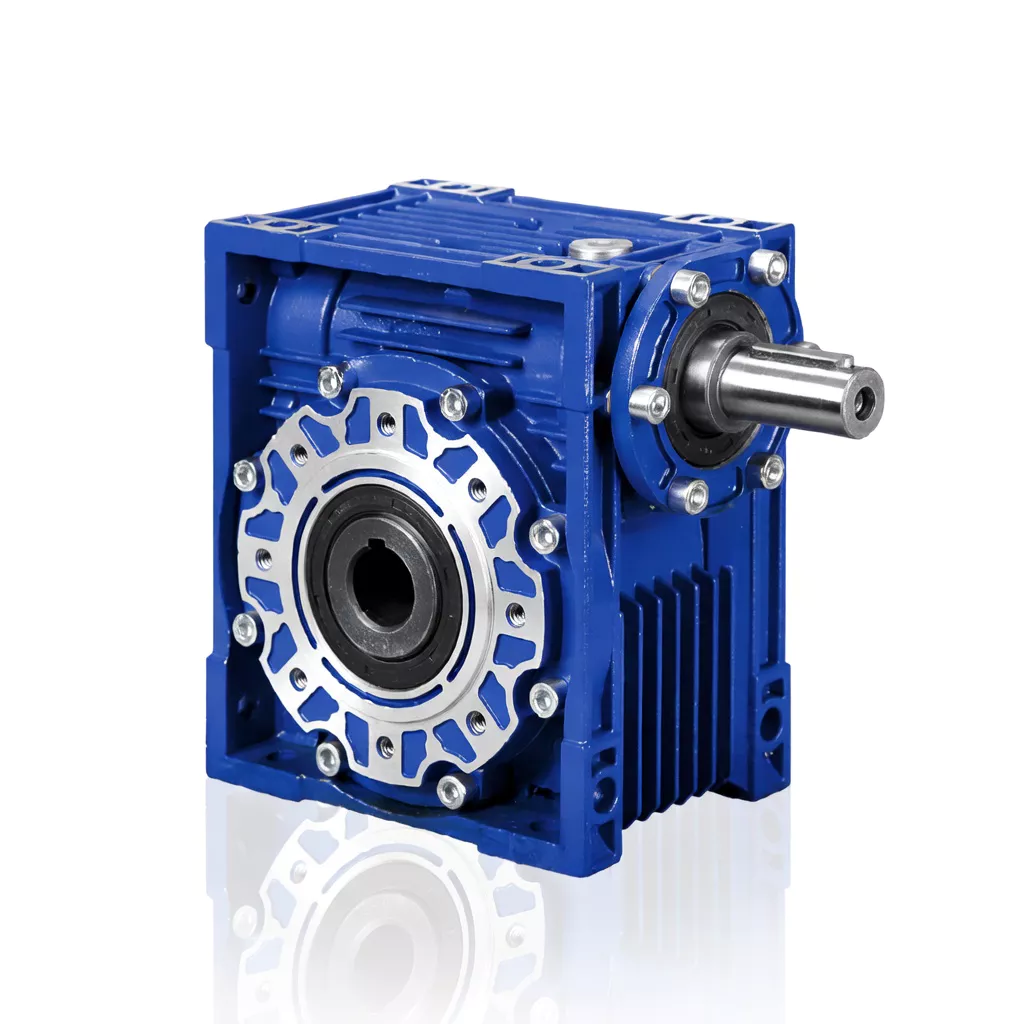
Dostępne w rozmiarach ramy od 025 do 150. Jednostopniowe przełożenia redukcyjne od 5:1 do 100:1. Moment obrotowy wyjściowy do 4200 N·m. Obudowa z aluminium lub żeliwa sferoidalnego. Kołnierz silnika IEC B5/B14. Standard IP65, opcjonalnie IP66/IP67. Smarowanie olejem syntetycznym lub mineralnym.
Standardy zgodności i jakości
Certyfikowany system zarządzania jakością. Każda jednostka produkowana i kontrolowana zgodnie z udokumentowanym systemem zarządzania jakością (QMS) z pełną identyfikowalnością.
Oznaczenie CE zgodne z Dyrektywą Maszynową UE. Szeroko akceptowane w projektach inżynieryjnych w Australii i Nowej Zelandii.
Wymiary kołnierza i wału zgodne z normą IEC. Kompatybilność z montażem bezpośrednim wszystkich głównych marek silników.
Pyłoszczelność i odporność na strumienie wody pod wysokim ciśnieniem. Standard dla instalacji zewnętrznych w Australii.
Studia przypadków
Case Study 1 — Gold Mine Apron Feeder, Kalgoorlie WA
Apron Feeder beneath Primary Jaw Crusher
Problem klienta: A Kalgoorlie gold mine experienced monthly worm wheel failures. The original gearbox had been sized at SF=1.0 — adequate for uniform load but unable to handle impact torques when large ore blocks fell onto the apron pans.
Rozwiązanie: NRV-130 worm gearbox (ratio 60:1, SF=2.0 selected output torque 2,800 N·m, taper roller bearings, IP66) replaced the undersized unit. A misalignment issue in the apron chain was also corrected.
Wynik: Worm wheel life extended from 4–6 weeks to over 18 months. Annual saving approximately $14,000 in parts and labour.
Case Study 2 — Quarry Grizzly Feeder Drive, Blue Mountains NSW
Vibrating Grizzly Feeder
Problem klienta: A sandstone quarry’s grizzly feeder drive was producing excessive vibration transmitted through the gearbox housing to the motor frame, causing terminal connection loosening and brush wear on the slip-ring motor.
Rozwiązanie: NMRV-110 worm gearbox with anti-vibration mounting feet and flexible coupling between motor and gearbox input shaft. Worm meshing geometry absorbs torsional shock better than helical gears.
Wynik: Motor terminal re-tightening interval extended from 4 weeks to 18 months. Slip-ring brush life doubled.
Case Study 3 — CSS Adjustment Actuator, Iron Ore Cone Crusher WA
Cone Crusher CSS Adjustment Drive
Problem klienta: The CSS adjustment actuator on a large secondary cone crusher was too fast — operators were overshooting target CSS by up to 5 mm due to inertia in the hydraulic adjustment system.
Rozwiązanie: A two-stage tandem NMRV worm gearbox (combined ratio 3,200:1) was installed, giving precise incremental CSS adjustment with positional resolution of 0.2 mm per motor revolution.
Wynik: CSS setting accuracy improved to ±0.5 mm. Product size P80 consistency improved by 12%, reducing oversize recirculation by 8% and increasing plant throughput.
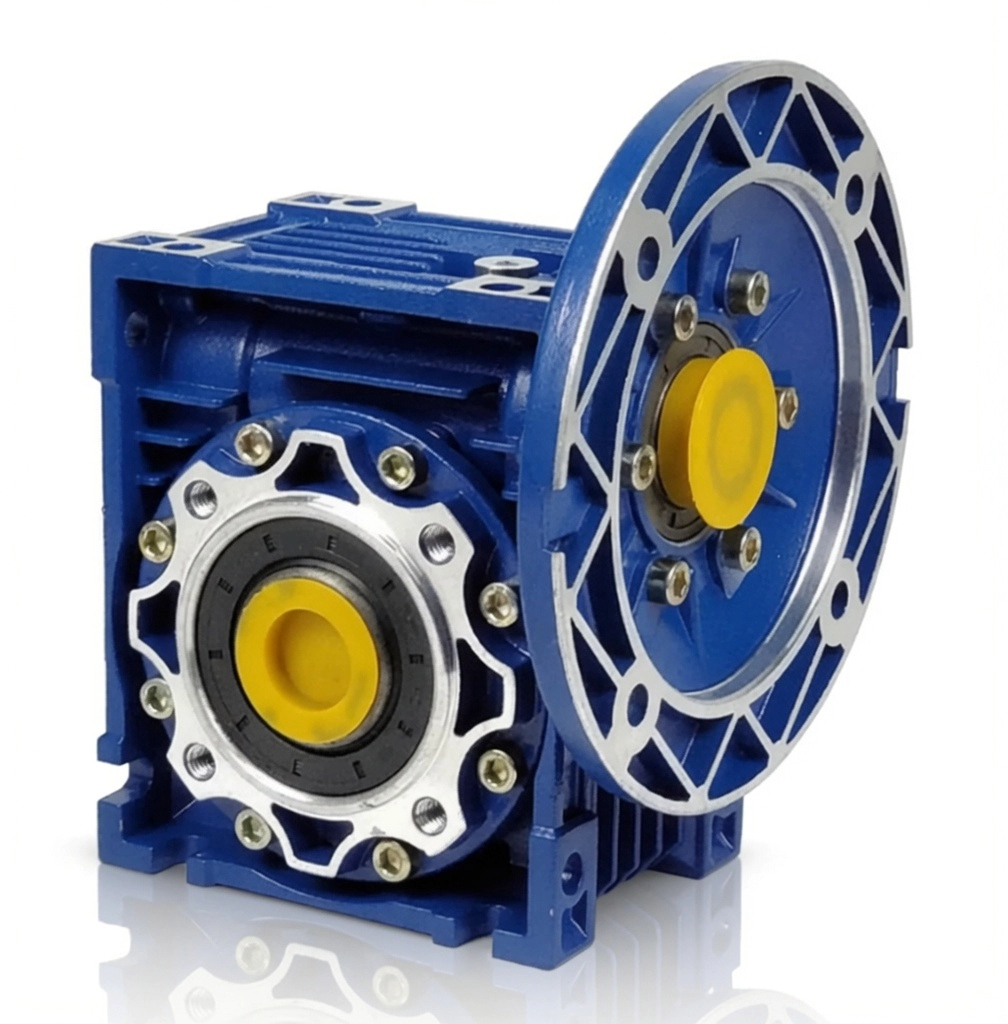
Przekładnie ślimakowe serii NMRV/NRV — rozmiary ramy od 025 do 150, produkowane zgodnie z normą ISO 9001:2015
Dlaczego warto nas wybrać?
Ponad 20 lat produkcji
Produkcja z certyfikatem ISO od 2003 roku. Przekładnie ślimakowe wysyłane do ponad 60 krajów.
Zdalna pomoc techniczna
Diagnostyka za pomocą połączeń wideo w różnych strefach czasowych Australii. Szybka reakcja bez konieczności wizyty na miejscu.
Personalizacja OEM/ODM
Wały niestandardowe, otwory przelotowe, kołnierze niestandardowe i przełożenia. Dostępny pełny przegląd rysunków.
Wartość bezpośrednio od producenta
Brak marży dystrybutora. Przejrzyste ceny hurtowe i znaczne oszczędności przy powtarzających się zamówieniach.
Stan magazynowy i szybka wysyłka
Standardowe ramy NMRV/NRV dostępne w magazynie. Pilne zamówienia realizowane z dostawą ekspresową.
Często zadawane pytania
Request Free Crusher Drive Selection and Sizing
Nasi inżynierowie są gotowi polecić właściwy model przekładni ślimakowej, przełożenie, konfigurację wału i sposób montażu dla Twojego zastosowania.
Dowiedz się więcej na temat strona aplikacji lub dowiedz się o nas na strona o nas.