Worm Gear Reducer for Mining Crushers
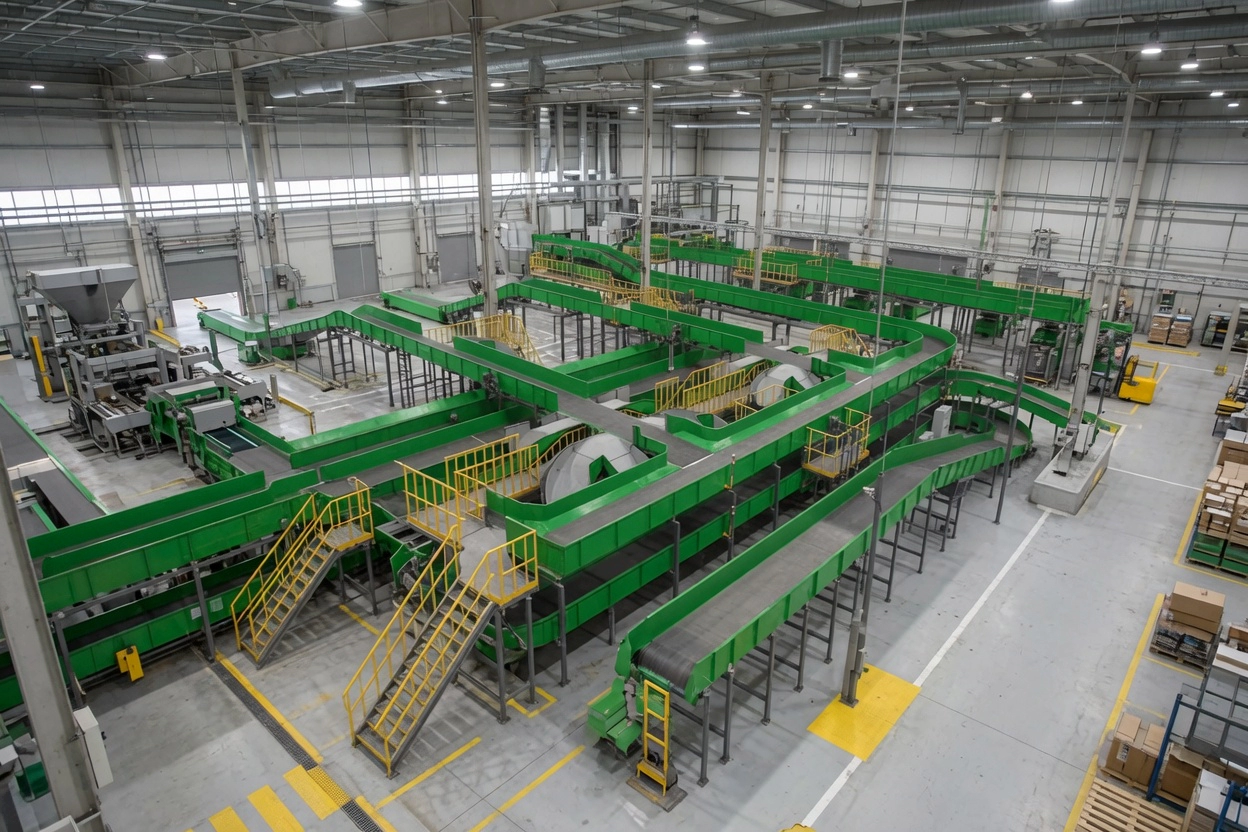
Mining crushers — jaw crushers, cone crushers, and roll crushers — represent some of the most mechanically demanding environments in heavy industry. They impose extreme impact loads, high starting torques, and continuous vibration on every drive component. The worm gear reducer deployed in crusher auxiliary and feeder drives delivers high reduction ratios in a compact envelope, ensuring full drive torque from a standard motor frame even in the space-constrained confines of a mine shaft or processing plant.
While the primary crusher drive may use a direct-drive or fluid coupling arrangement, worm gearboxes serve critical roles in the crusher circuit: driving the vibrating grizzly feeder that regulates ore feed rate, actuating the CSS adjustment mechanism, driving the lubrication oil pump motor on large gyratory crushers, and controlling the apron feeder beneath the jaw crusher discharge.
In all these roles, the worm reducer’s defining advantage is torque multiplication at compact size — reduction ratios up to 100:1 from a single stage allow a small motor to overcome the starting inertia and shock loads characteristic of crusher circuits.
Industry Application & Use Cases
In a typical crusher plant layout, worm gearboxes appear at multiple points in the circuit:
- Vibrating grizzly feeder drives — eccentric mass adjustment and feed rate control
- CSS adjustment actuators on cone crushers — precise low-speed setting changes under hydraulic load
- Apron feeder drives beneath jaw crushers — high starting torque against loaded apron pans
- Roll crusher drives (secondary stage) — low-speed high-torque direct drive of crushing rolls
- Lubrication pump drives on large gyratory crushers — slow continuous pump rotation
Material specifications for crusher duty: Worm shaft in carburised-and-quenched alloy steel (HRC 60–62). Worm wheel in special alloy bronze with higher tin content for improved impact resistance. Housing in ductile iron GGG40 with IP65 sealing as minimum — IP66 recommended near crusher discharge zones where water-and-fines slurry splashing is common.
Shock load and service factor: Crusher circuits are classified as heavy-shock applications with service factor SF=1.75–2.0. This means the gearbox must be selected with a rated output torque at least 1.75× the calculated application torque. Undersizing a worm gearbox in a crusher circuit leads to premature bronze wheel wear and thermal overload.

Technical Specifications & Selection Guide
Use the table below to identify the appropriate model. Key parameters include reduction ratio, output torque, shaft dimensions, and housing material. Always apply the correct Service Factor (SF) for your duty cycle.
| Parameter | Typical Range / Value | Selection Notes |
|---|---|---|
| Ratio | 20:1 – 100:1 recommended | Higher ratios for very slow feeder or actuator drives |
| Output Torque (SF=1.0) | Up to 4,200 N·m | Apply SF 1.75–2.0 for crusher circuit selection |
| Input Shaft | IEC B5/B14 flange | IEC 60034 — direct-mount to standard motors |
| Output Shaft | 25 – 50 mm solid or hollow bore | Hollow bore recommended for direct roll-crusher shaft coupling |
| Housing Material | Ductile Iron GGG40 | Mandatory for shock-load crusher circuit service |
| Bearing Type | Taper roller (input + output) | Required for combined radial/axial load in crusher duty |
| Protection Class | IP65 minimum; IP66 preferred | Near crusher discharge and slurry zones specify IP66 |
► Service Factor (SF): Uniform load SF=1.0 | Moderate shock SF=1.25–1.5 | Heavy shock / 24 h continuous SF=1.75–2.0
► Ambient temperature: Standard units rated –10°C to +40°C. Australian high-ambient sites (>45°C) require high-temperature lubricant and 15% thermal derating.
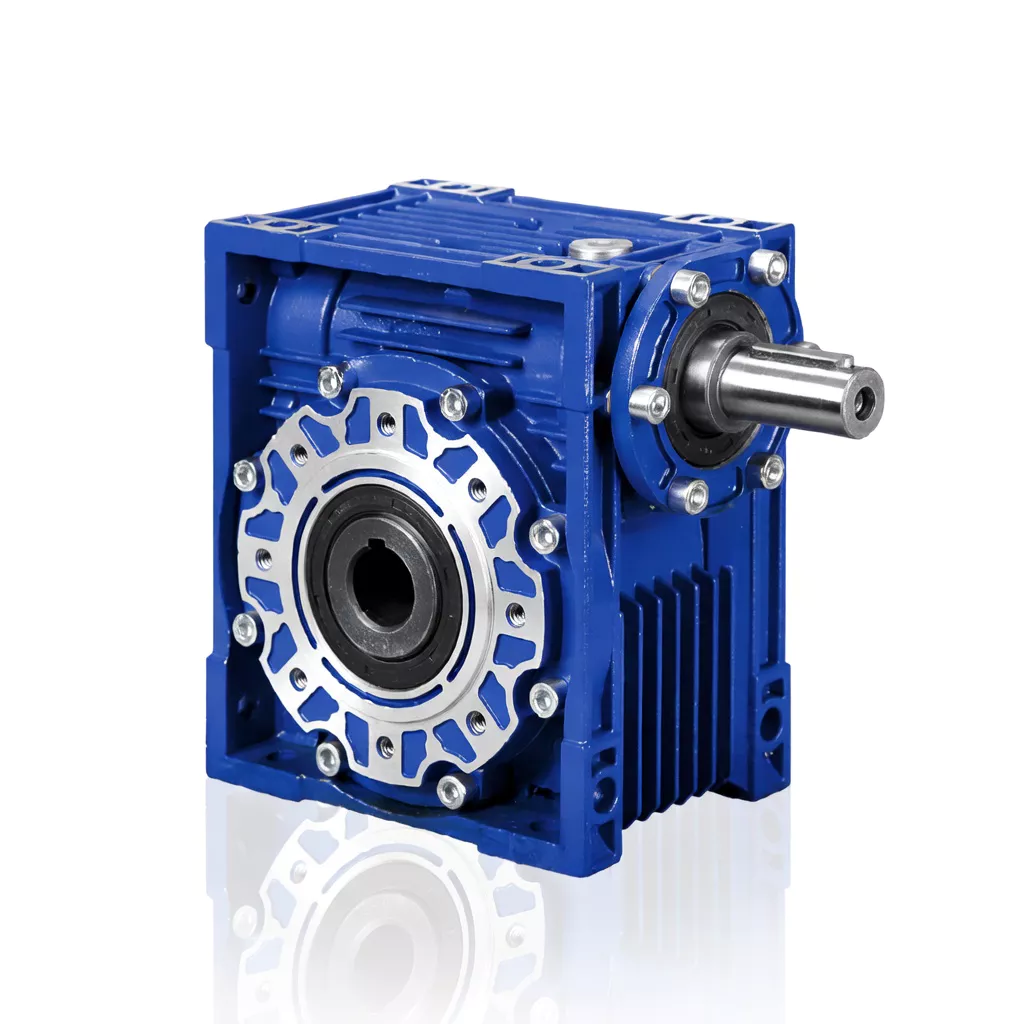
Available in frame sizes 025 through 150. Single-stage reduction ratios 5:1 to 100:1. Output torque up to 4,200 N·m. Aluminium or ductile iron housing. IEC B5/B14 motor flange. IP65 standard, IP66/IP67 optional. Synthetic or mineral oil lubrication.
Compliance & Quality Standards
Quality management system certified. Every unit manufactured and inspected under a documented QMS with full traceability.
CE marked for EU Machinery Directive. Widely accepted on Australian and New Zealand engineering projects.
IEC standard flange and shaft dimensions. Direct-mount compatibility with all major motor brands.
Dust-tight and high-pressure jet-water resistant. The standard for Australian outdoor installations.
Case Studies
Case Study 1 — Gold Mine Apron Feeder, Kalgoorlie WA
Apron Feeder beneath Primary Jaw Crusher
Customer Pain Point: A Kalgoorlie gold mine experienced monthly worm wheel failures. The original gearbox had been sized at SF=1.0 — adequate for uniform load but unable to handle impact torques when large ore blocks fell onto the apron pans.
Solution: NRV-130 worm gearbox (ratio 60:1, SF=2.0 selected output torque 2,800 N·m, taper roller bearings, IP66) replaced the undersized unit. A misalignment issue in the apron chain was also corrected.
Result: Worm wheel life extended from 4–6 weeks to over 18 months. Annual saving approximately $14,000 in parts and labour.
Case Study 2 — Quarry Grizzly Feeder Drive, Blue Mountains NSW
Vibrating Grizzly Feeder
Customer Pain Point: A sandstone quarry’s grizzly feeder drive was producing excessive vibration transmitted through the gearbox housing to the motor frame, causing terminal connection loosening and brush wear on the slip-ring motor.
Solution: NMRV-110 worm gearbox with anti-vibration mounting feet and flexible coupling between motor and gearbox input shaft. Worm meshing geometry absorbs torsional shock better than helical gears.
Result: Motor terminal re-tightening interval extended from 4 weeks to 18 months. Slip-ring brush life doubled.
Case Study 3 — CSS Adjustment Actuator, Iron Ore Cone Crusher WA
Cone Crusher CSS Adjustment Drive
Customer Pain Point: The CSS adjustment actuator on a large secondary cone crusher was too fast — operators were overshooting target CSS by up to 5 mm due to inertia in the hydraulic adjustment system.
Solution: A two-stage tandem NMRV worm gearbox (combined ratio 3,200:1) was installed, giving precise incremental CSS adjustment with positional resolution of 0.2 mm per motor revolution.
Result: CSS setting accuracy improved to ±0.5 mm. Product size P80 consistency improved by 12%, reducing oversize recirculation by 8% and increasing plant throughput.
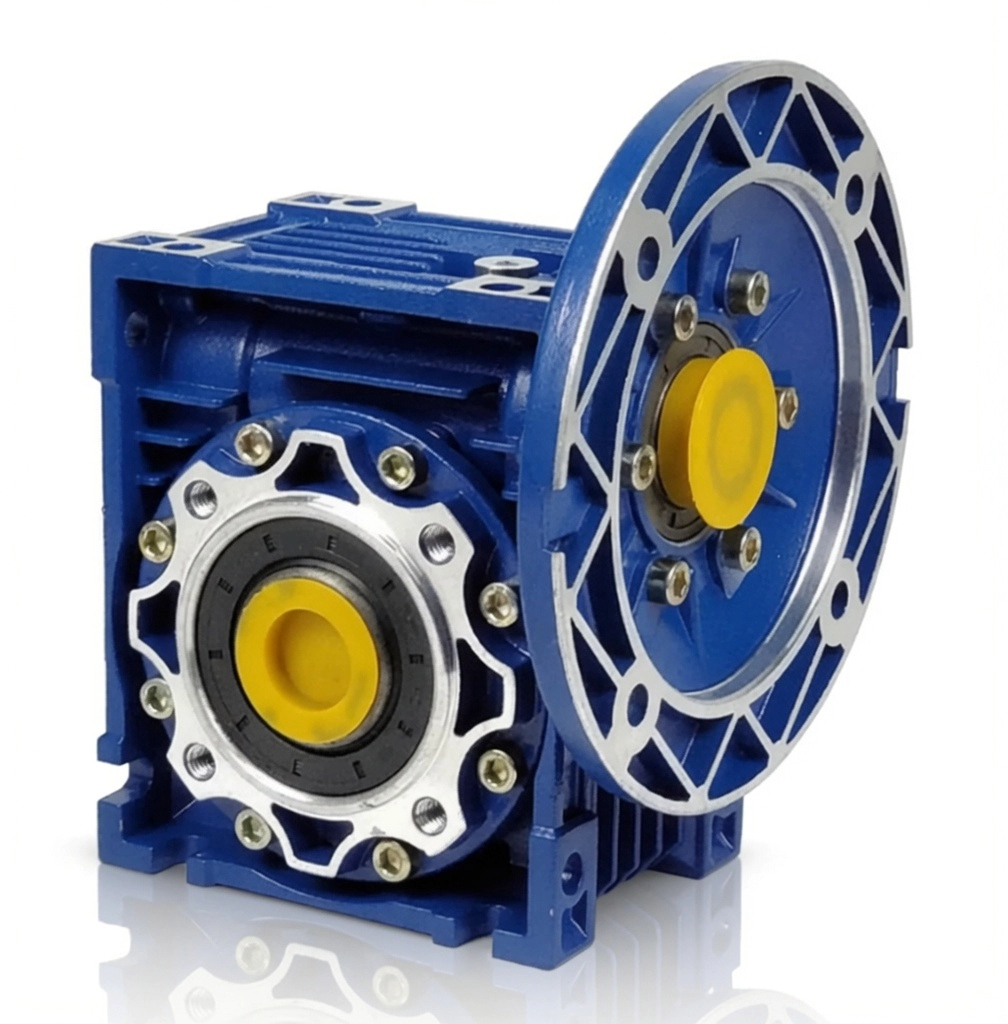
NMRV / NRV series worm gearboxes — frame sizes 025 to 150, manufactured to ISO 9001:2015
Why Choose Us?
20+ Years Manufacturing
ISO-certified production since 2003. Worm gearboxes shipped to 60+ countries.
Remote Technical Support
Video-call diagnostics across Australian time zones. Rapid response without on-site visits.
OEM / ODM Customisation
Non-standard shafts, hollow bore, custom flanges and ratios. Full drawing review available.
Factory-Direct Value
No distributor margin. Transparent volume pricing with significant savings on repeat orders.
Stock & Fast Dispatch
Standard NMRV/NRV frames in warehouse stock. Urgent orders processed for express freight.
Frequently Asked Questions
Request Free Crusher Drive Selection and Sizing
Our engineers are ready to recommend the right worm gearbox model, ratio, shaft configuration, and mounting arrangement for your application.
Explore more on the applications page or learn about us on the about us page.